
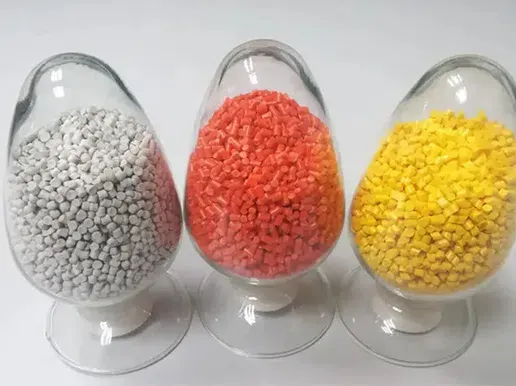
Core Overview: A Versatile Polymer Moving Toward Green and High-End Development
Polyvinyl Chloride (PVC), one of the world’s five major general-purpose plastics, is polymerized from vinyl chloride monomer (VCM) through free-radical polymerization. Boasting excellent flame retardancy, chemical resistance, electrical insulation, mechanical strength and cost-effectiveness, it is widely applied in construction, electric power, medical care, packaging and new energy industries. Driven by global infrastructure investment, urbanization progress and increasingly strict environmental regulations, the PVC industry is speeding up its transition from traditional large-scale manufacturing to green, low-carbon and high-performance production, featuring steady demand growth and constant technological innovations.
1. Market Dynamics: Asia-Pacific Leads Growth Momentum, Strong Demand in Core Sectors
The global PVC market maintains a strong and steady growth trajectory. With a market scale of approximately $98 billion in 2024 and a compound annual growth rate (CAGR) of around3.5%, the global market is expected to reach nearly $102 billion in 2026 and surpass $115 billion by 2030.
Regional and Production Landscape
Asia-Pacific takes a dominant position in the global PVC market, contributing over 60% to both global production and consumption. China accounts for more than 40% of the world’s PVC production capacity, serving as the core producer and exporter. Its export volume keeps growing, driven by rising demand from Southeast Asia, India, the Middle East and Africa. The global supply pattern is gradually shifting toward energy-efficient and eco-friendly production routes, with ethylene-based PVC and mercury-free calcium carbide-based PVC gaining broader acceptance.
Demand Structure (2026 Estimate)
•Construction Pipes & Fittings (≈40%): The largest downstream segment, utilized in water supply, drainage and municipal engineering projects.
•Profiles & Doors/Windows (≈25%): A core material for energy-saving building structures and residential construction.
•Packaging & Films (≈12%): Applied in food packaging, industrial films and protective materials.
•Wire & Cable Insulation (≈10%): Favored due to its superior insulation and flame-retardant performance.
•Medical, Automotive & Others (≈13%): Fast-growing segments including medical tubes, automotive interiors and new energy components.
Price and Cost Drivers
PVC prices are mainly influenced by the costs of raw materials such as crude oil, coal, limestone, liquid chlorine and ethylene, as well as energy prices and shipping costs. Standard general-purpose PVC resin is priced between $850–$1,150 per ton, while high-performance, medical-grade and eco-friendly modified products command a premium of 15–30%.
2. Technological Breakthroughs: Green Production and High-Performance Modification
Technological advancements center on pollution reduction, energy conservation and product upgrading, with cleaner and more efficient solutions gradually replacing traditional production processes:
•Mercury-Free Catalytic Technology: Breakthroughs in copper-based and non-noble metal catalysts have enabled the full industrial application of mercury-free production in calcium carbide-based PVC, eradicating mercury contamination and adhering to the Minamata Convention on Mercury.
•Advanced Ethylene-Based Process: Closed-loop, continuous production enhances product purity, reduces energy consumption and cuts carbon emissions per ton of PVC.
•High-Efficiency Modification Technology: Impact-resistant, heat-stable and low-VOC PVC products are developed through eco-friendly plasticizers, nano-fillers and compound modification techniques.
•Circular Recycling Technology: Physical and chemical recycling of post-consumer PVC waste realizes resource reuse and supports low-carbon development goals.
Global patent filings for PVC green production and modification technologies increased rapidly between 2024 and 2025, focusing on mercury-free catalysis, waste utilization and high-performance customization.
3. Application Expansion: From Traditional Construction to High-End Scenarios
With performance upgrades and green certification, the application scope of PVC continues to expand alongside:
•Construction & Infrastructure: Remains the core application field, with strong demand for pipes, profiles, floorings and wall panels in infrastructure and affordable housing projects.
•Electric & Electronic: Widely used in wire & cable insulation, connectors and battery components due to its excellent insulation and flame retardancy.
•Medical & Healthcare: DEHP-free and medical-grade PVC is employed in infusion tubes, breathing circuits and disposable devices, complying with rigorous biocompatibility requirements.
•Packaging & Daily Use: Safe, non-toxic PVC films and boxes are used for food, cosmetics and pharmaceutical packaging.
•New Energy & Emerging Fields: Applied in photovoltaic component parts, energy storage equipment accessories and lightweight automotive interiors, creating new growth engines.
4. Future Outlook: Growth Opportunities and Industry Challenges
Key Growth Drivers
•Global Infrastructure & Urbanization: Stable demand from water conservancy, transportation and real estate sectors in emerging markets.
•Green & Low-Carbon Policies: Promotion of mercury-free production, circular recycling and eco-friendly modified products.
•High-End Application Upgrade: Rising demand for medical, new energy and food-grade PVC drives the optimization of product structure.
•Supply Chain Restructuring: Steady capacity expansion and regionalized supply enhance market resilience.
Main Challenges
•Fluctuations in raw material and energy costs impact the profitability of production operations.
•Stricter environmental and safety regulations increase enterprise compliance costs.
•Substitution pressure from polypropylene (PP), polyethylene (PE) and biodegradable polymers in certain application scenarios.
•Uneven global recycling systems hinder the development of the circular PVC economy.
Industry Insight
The global PVC industry is at a critical turning point, shifting from volume expansion to quality upgrading and green development. Future competition will focus on green production technologies, high-purity and high-performance modified products, circular economy solutions and compliance with global certifications. As the core of the global supply chain, China leads in production scale, process improvement and cost control. The long-term growth of the industry will rely on technological innovation, standard improvement and collaboration with downstream applications, transforming PVC from a general bulk material into a high-value green engineering material to support global sustainable development.



