

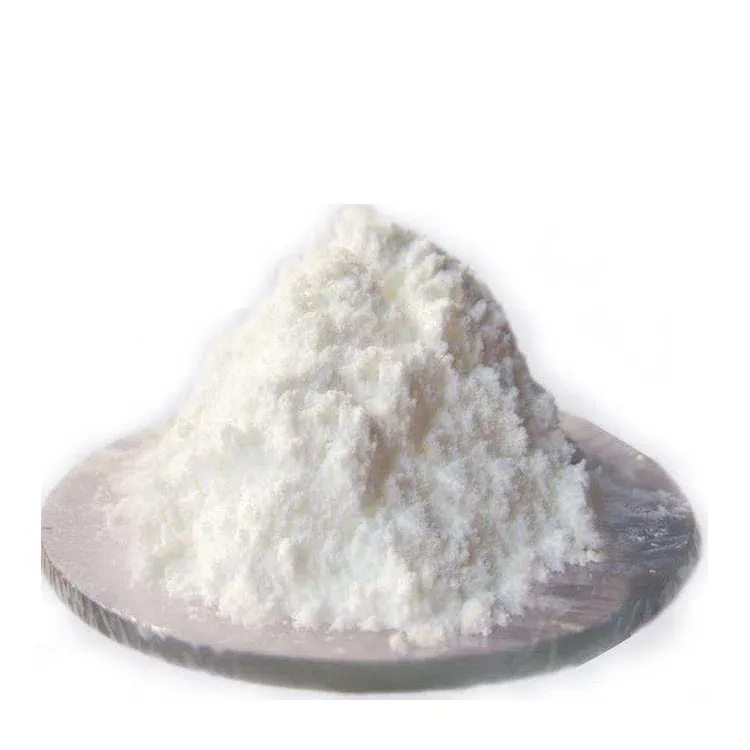
Product Description
Phenylhydrazine CAS#100-63-0
It appears as pale yellow crystals with a melting point of 66°F and turns into an oily liquid under certain conditions. This chemical is toxic through ingestion, inhalation, and skin absorption. It has a flash point of 192°F and autoignition temperature of 345°F, and it dissolves well in alcohol.

Chemical Properties
| Item | Value |
| Melting point | 18-21 °C lit. |
| Boiling point | 238-241 °C lit. |
| density | 1.098 g/mL at 25 °C lit. |
| vapor density | 4.3 vs air |
| vapor pressure | <0.1 mm Hg 20 °C |
| refractive index | n20/D 1.607 lit. |
| Fp | 192 °F |
| storage temp. | Store below +30°C. |
| solubility | Soluble in dilute acids. |
| form | Powder |
| pka | 8.79 at 15℃ |
| color | White to slightly blue or light beige |
| explosive limit | 1.1% V |
| Water Solubility | 145 g/L 20 ºC |
| Sensitive | Air & Light Sensitive |
| Merck | 14 7293 |
| BRN | 606080 |
| Dielectric constant | 7.2 23℃ |
| Exposure limits | TLV-TWA skin 0.1 ppm 0.44 mg/m3 ACGIH 5 ppm 22 mg/m3 OSHA STEL 10 ppm 44 mg/m3 OSHA carcinogenicity A2-Suspected Human Carcinogen ACGIH Carcinogen NIOSH |
| Stability | Stable but may decompose in sunlight May be air or light sensitive Incompatible with strong oxidizing agents metal oxides |
| InChI | 1S/C6H8N2/c7-8-6-4-2-1-3-5-6/h1-5 8H 7H2 |
| InChIKey | HKOOXMFOFWEVGF-UHFFFAOYSA-N |
| SMILES | NNc1ccccc1 |
| CAS DataBase Reference | 100-63-0 CAS DataBase Reference |
| NIST Chemistry Reference | Hydrazine phenyl- 100-63-0 |
| EPA Substance Registry System | Phenylhydrazine 100-63-0 |
Safety Information
| Item | Value |
| Hazard Codes | T N |
| Risk Statements | 45-23/24/25-36/38-43-48/23/24/25-50-68 |
| Safety Statements | 53-45-61 |
| RIDADR | UN 2572 6.1/PG 2 |
| OEL | Ceiling 0.14 ppm 0.6 mg/m3 [2-hr] [skin] |
| WGK Germany | 3 |
| RTECS | MV8925000 |
| F | 8-10-23 |
| Autoignition Temperature | 345 °F |
| TSCA | TSCA listed |
| HS Code | 2928 00 90 |
| HazardClass | 6.1 |
| PackingGroup | II |
| Storage Class | 6.1A Combustible acute toxic Cat 1 and 2 very toxic hazardous materials |
| Hazard Classifications | Acute Tox 3 Dermal Acute Tox 3 Inhalation Acute Tox 3 Oral Aquatic Acute 1 Carc 1B Eye Irrit 2 Muta 2 Skin Irrit 2 Skin Sens 1 STOT RE 1 |
| Hazardous Substances Data | 100-63-0 Hazardous Substances Data |
| Toxicity | LD50 orally in Rabbit 188 mg/kg |
| IDLA | 15 ppm |
Product Application Of Phenylhydrazine CAS#100-63-0
As the first synthetic hydrazine derivative phenylhydrazine serves widely as an intermediate in organic dyes pharmaceuticals and pesticides. It is a key building block for synthesizing pyrazoline triazole and indole compounds. It acts as a dye intermediate for products like 1-phenyl-3-methyl-5-pyrazolone used in disazo dyes. In pharma it supports the production of antipyretics analgesics and anti-inflammatory agents such as antipyrine and aminopyrine. It also functions as a photosensitive dye in photography and is a raw material for the pesticide imputed phosphorus. Additionally it is a classic reagent for detecting carbonyl groups aldehydes ketones and carbohydrates.
Phenylhydrazine is highly toxic Inhalation can lead to hemolysis anemia headaches and severe cases may involve jaundice It irritates the eyes and may cause corneal damage The oral LD50 in rats is 188 mg/kg The maximum allowed concentration at workplaces is 0.44mg/m3
In laboratory synthesis aniline reacts with sodium nitrite in hydrochloric acid to form a diazonium salt This intermediate is reduced with sulfur dioxide and sulfurous acid to phenylhydrazine sodium sulfonate Further treatment with hydrochloric acid yields phenylhydrazine hydrochloride Neutralization and deacidification produce the final phenylhydrazine product.
Factory and Equipment Show
Fast delivery time Inventory orders 2-3 working days New production 7-10 working days.


