

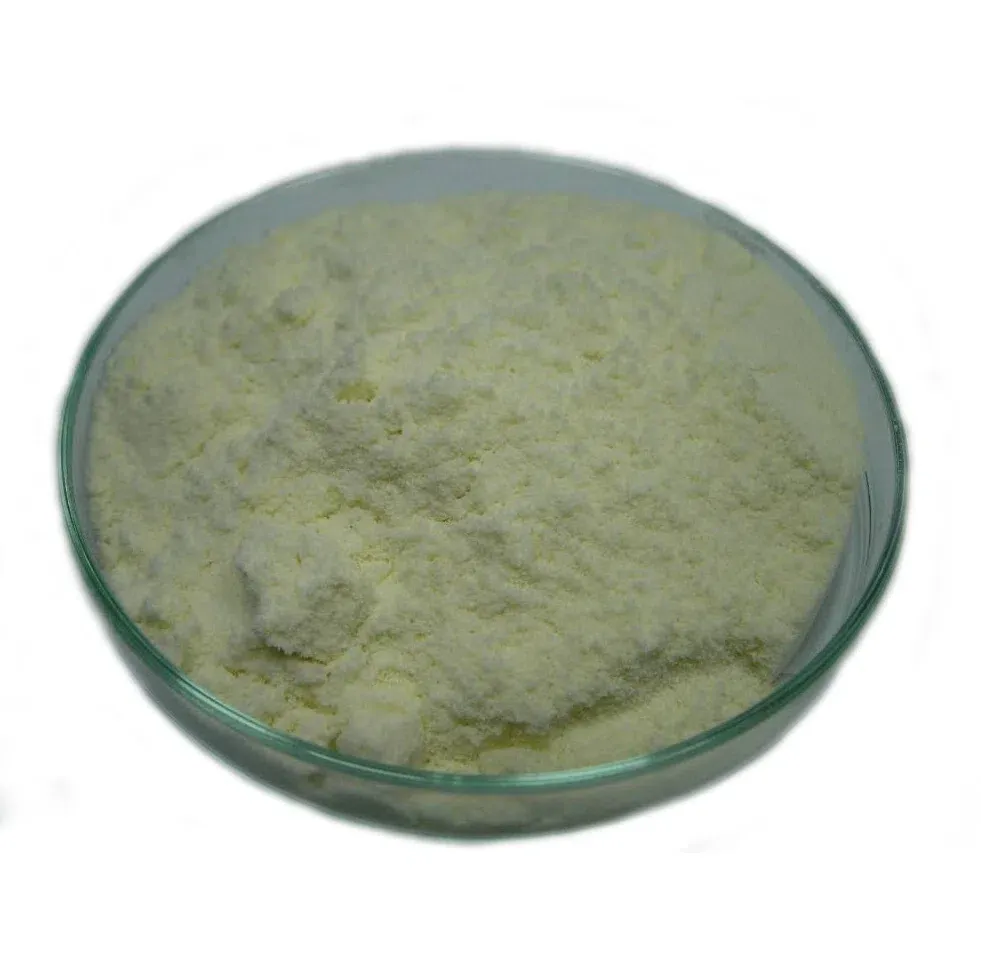
Products Description
Polyquaternium‑10 refers to a series of quaternary ammonium polymers derived from hydroxyethyl cellulose (HEC) that has been reacted with trimethyl ammonium‑substituted epoxide. Its aqueous solutions exhibit non‑Newtonian flow behavior. Commercially, it is supplied in multiple viscosity grades based on molecular weight and with varying levels of cationic substitution, ranging from high to moderate. In vivo evaluations confirm that these cationic cellulosic polymers help shield skin from irritation caused by anionic surfactants.
Chemical Properties
| Item | Value |
| Melting point | 290 °C(lit.) |
| Cosmetics Ingredients Functions | FILM FORMING, ANTISTATIC |
| EPA Substance Registry System | Cellulose, 2-hydroxyethyl 2-[2-hydroxy-3-(trimethylammonio)propoxy]ethyl 2-hydroxy-3-(trimethylammonio)propyl ether, chloride (81859-24-7) |
Safety Information
| Item | Value |
| Hazard Codes | Xi |
| Risk Statements | 36/37/38 |
| Safety Statements | 26-36 |
| WGK Germany | 3 |
| Toxicity | LD50 oral in rat: > 2gm/kg |
Product Application
Polyquaternium‑10 is a cellulose‑based polymeric conditioning agent widely used in skin‑care and hair‑care formulations.
Many cationic polymers deliver conditioning performance, including enhanced wet combing and reduced static. Key examples include: Polyquaternium‑10 (quaternized hydroxyethyl cellulose), Polyquaternium‑7 (copolymer of diallyldimethylammonium chloride and acrylamide), Polyquaternium‑11 (copolymer of vinylpyrrolidone and dimethylaminoethyl methacrylate quaternized with dimethyl sulfate), Polyquaternium‑16 (copolymer of vinylpyrrolidone and quaternized vinylimidazole), and Polyquaternium‑6 (homopolymer of diallyldimethylammonium chloride).
Supply & Delivery
Fast delivery time
Inventory: 2-3 working days
New production: 7-10 working days


