

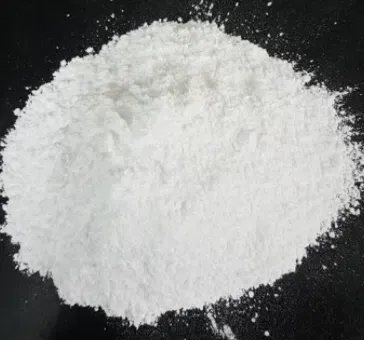
Products Description
Silicon carbide is a hard covalent material mainly produced through carbothermal reduction of silica. It is manufactured by heating silica sand and petroleum coke around electrodes in an electric resistance furnace to temperatures above 2200°C. Based on reaction conditions, the product appears as fine powder or bonded bulk that needs crushing and grinding for further use. It shows outstanding abrasion resistance, corrosion resistance to molten slag, and excellent thermal spalling resistance. As a carbide material, it oxidizes relatively easily and possesses relatively high electrical conductivity.
Chemical Properties
| Item | Value |
| Melting point | 2700 °C lit. |
| bulk density | 0.069g/cm3 |
| density | 3.22 g/mL at 25 °C lit. |
| refractive index | 2.6500 |
| solubility | Soluble in molten sodium hydroxidepotassium hydroxide and molten iron |
| form | nanopowder |
| color | Green |
| Specific Gravity | 3.22 |
| Resistivity | 107–200 ρ/μΩ.cm |
| Water Solubility | Soluble in molten alkalis NaOHKOH and molten iron Insoluble in water |
| Hydrolytic Sensitivity | 1 no significant reaction with aqueous systems |
| Crystal Structure | Cubic Sphalerite Structure Space Group F(-4)3m |
| Merck | 14,8492 |
| Exposure limits | ACGIH TWA 10 mg/m3 TWA 3 mg/m3 TWA 0.1 fiber/cm3 OSHA TWA 15 mg/m3 TWA 5 mg/m3 NIOSH TWA 10 mg/m3 TWA 5 mg/m3 |
| Stability | Stable |
| Cosmetics Ingredients Functions | ABRASIVE |
| InChIKey | HBMJWWWQQXIZIP-UHFFFAOYSA-N |
| Knoop Microhardness | 3000 at 25°C |
| Shear Modulus | 180 GPa Calculated |
| Modulus of Elasticity | 459 - 476 GPa |
| Poissons Ratio | 0.14 sintered |
| NIST Chemistry Reference | Silicon monocarbide 409-21-2 |
| IARC | 2A Vol. 111 2017 |
| EPA Substance Registry System | Silicon carbide 409-21-2 |
Safety Information
| Item | Value |
| Hazard Codes | Xi |
| Risk Statements | 36/37/38 |
| Safety Statements | 26-36 |
| OEB | B |
| OEL | TWA 10 mg/m3 total |
| WGK Germany | 3 |
| RTECS | VW0450000 |
| TSCA | Yes |
| HS Code | 28492000 |
| Hazardous Substances Data | 409-21-2 Hazardous Substances Data |
Product Application
Silicon carbide is among the few fully synthetic minerals applied in refractory applications. Common bonding systems include oxide-bonded SiO2 Al2O3 silicate glass, silicon oxynitride Si2ON2, and silicon nitride Si3N4. The first three bonding types form permeable products. In refractory structures, chemical failure often starts with corrosion attacking the binding phase, so permeable products degrade much faster when corrosive media penetrate the bulk material.
Supply & Delivery
Fast delivery time
Inventory: 2-3 working days
New production: 7-10 working days


