

Product Details
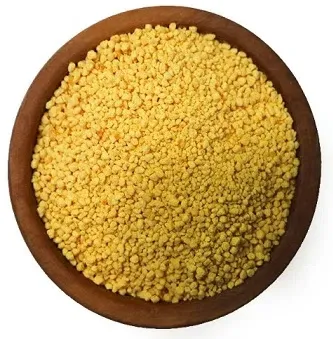
Food-grade lecithin is derived from soybeans and other plant sources. It is a complex blend of acetone-insoluble phosphatides, mainly composed of phosphatidylcholine, phosphatidylethanolamine, and phosphatidylinositol, mixed with varying quantities of triglycerides, fatty acids, carbohydrates, and other substances. Refined lecithin features these components in different ratios based on fractionation methods. In its oil-free form, triglycerides and fatty acids are mostly removed, resulting in a product with at least 90% phosphatides from the full or selected fractions of the complex. Both natural and refined lecithin can be plastic or fluid in texture, affected by free fatty acid content, oil content, and added diluents. Color ranges from pale yellow to brown, determined by source, crop conditions, and bleaching treatment. It is either odorless or has a mild nutty scent with a neutral taste. Edible diluents like cocoa butter and vegetable oils often replace soybean oil to enhance functionality and flavor. Lecithin is only slightly soluble in water but hydrates easily to form emulsions. Oil-free phosphatides dissolve in fatty acids but are nearly insoluble in fixed oils. With all phosphatide fractions present, lecithin is partially soluble in alcohol and almost insoluble in acetone.
Parameters
| Item | Value |
| Melting point | >145°C (dec.) |
| density | d424 1.0305 |
| refractive index | 1.4649-1.4710 |
| Fp | 57 °C |
| storage temp. | -20°C |
| solubility | chloroform: 0.1 g/mL, slightly hazy, slightly yellow to deep orange |
| form | solution |
| color | Pale Brown to Yellow |
| Odor | at 100.00%. bland fatty |
| biological source | soybean |
| Water Solubility | NEGLIGIBLE |
| Merck | 14,5429 |
| BRN | 5209585 |
| Stability: | Stable, but light, heat, moisture and air-sensitive. Incompatible with strong oxidizing agents. |
| Cosmetics Ingredients Functions | ANTISTATIC SKIN CONDITIONING - EMOLLIENT SKIN CONDITIONING SURFACTANT - EMULSIFYING |
| Cosmetic Ingredient Review (CIR) | Lecithin (8002-43-5) |
| InChIKey | FWMYJLDHIVCJCT-VSZGHEPYSA-N |
| SMILES | [P](=O)([O-])(OC[C@H](OC(=O)CCCCCCC\C=C/C\C=C/CCCCC)COC(=O)CCCCCCCCCCCCCCC)OCC[N+](C)(C)C |
| CAS DataBase Reference | 8002-43-5 |
| EPA Substance Registry System | Lecithins (8002-43-5) |
Safety Information
| Item | Value |
| Hazard Codes | |
| Risk Statements | |
| Safety Statements | |
| WGK Germany | 3 |
| RTECS | OG7565000 |
| F | 1-8-10 |
| TSCA | TSCA listed |
| HS Code | 29239000 |
| Storage Class | 3 - Flammable liquids |
| Hazard Classifications | Eye Irrit. 2 Flam. Liq. 2 |
| Hazardous Substances Data | 8002-43-5(Hazardous Substances Data) |
| Toxicity | LD50 oral in rat: > 8mL/kg |
Product Application
Lecithin acts as an emulsifier and a mixture of surface-active phosphatides. Commercially available lecithin is mainly sourced from soybeans; early sources included egg yolk. It is used in margarine as an emulsifier and anti‑splattering agent. In chocolate production, it lowers viscosity and reduces cocoa butter demand by 3–5%, controlling flow properties. It serves as a wetting agent in cocoa powder, fillings, and drink powders. It prevents sticking in griddle fats. In baked goods, it helps shortening blend with dough ingredients and stabilizes air cells. Typical use concentration is 0.1–1.0%.
Fast delivery time
Inventory 2-3 working days New production 7-10 working days.


