

Product Details
Products Description of D(+)-GlucoseCAS#50-99-7
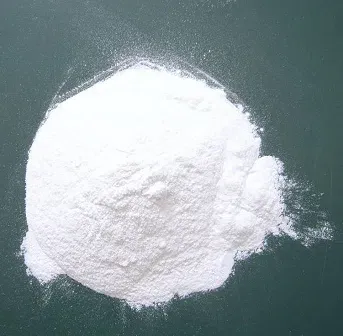
D-(+)-Glucose (anhydrous glucose) industrial product purity ≥ 99%, white crystalline powder with odorless and sweet taste. Melting point 146℃, boiling point 527.1℃ (760mmHg). Vapor pressure 8.0×10⁻¹⁴mmHg (25℃), relative density 1.544 (20℃). Solubility in water: soluble, slightly soluble in ethanol, insoluble in ether. Stable, incompatible with strong oxidants.
Parameters
| Parameter | Value |
| Melting point | 150-152 °C(lit.) |
| alpha | 52.75 º (c=10, H2O, NH4OH 25 ºC) |
| Boiling point | 232.96°C (rough estimate) |
| bulk density | 630kg/m3 |
| density | 1.5440 |
| refractive index | 53 ° (C=10, H2O) |
| storage temp. | room temp |
| solubility | H2O: 1 M at 20 °C, clear, colorless |
| pka | pKa 12.43(H2O,t = 18,)(Approximate) |
| form | Crystalline Powder |
| color | White |
| Odor | Odorless |
| PH | 5.0-7.0 (25℃, 1M in H2O) |
| PH Range | 5.9 |
| Optical Rotation | [α]25/D +52.5 to +53.0°(lit.) |
| biological source | wheat |
| Water Solubility | Soluble |
| λmax | λ: 260 nm Amax: 0.03 λ: 280 nm Amax: 0.02 |
| Merck | 14,4459 |
| BRN | 128160 |
| Stability: | Stable. Substances to be avoided include strong oxidizing agents. Combustible. |
| InChIKey | WQZGKKKJIJFFOK-DVKNGEFBSA-N |
| LogP | -2.490 (est) |
| CAS DataBase Reference | 50-99-7(CAS DataBase Reference) |
| NIST Chemistry Reference | Glucose(50-99-7) |
| EPA Substance Registry System | Dextrose (50-99-7) |
Safety Information
| Item | Details |
| Hazard Codes | Xi,Xn |
| Risk Statements | 36/37/38-63-62-46-36/38-21 |
| Safety Statements | 26-36/37-24/25-53-25 |
| WGK Germany | 1 |
| RTECS | LZ6600000 |
| F | 3 |
| Autoignition Temperature | 500 °C |
| TSCA | Yes |
| HS Code | 17023051 |
| Hazardous Substances Data | 50-99-7(Hazardous Substances Data) |
| Toxicity | LD50 orally in Rabbit: 25800 mg/kg |
Product Application of D(+)-GlucoseCAS#50-99-7
Glucose is the primary fuel for biological respiration. During digestion, complex sugars and starches are broken down into glucose (as well as fructose and galactose) in the small intestine. Glucose then moves into the bloodstream and is transported to the liver where glucose is metabolized through a series of biochemical reactions, collectively referred to as glycolysis.
Factory and Equipment Show
Fast delivery time
Inventory 2-3 working days New production 7-10 working days


