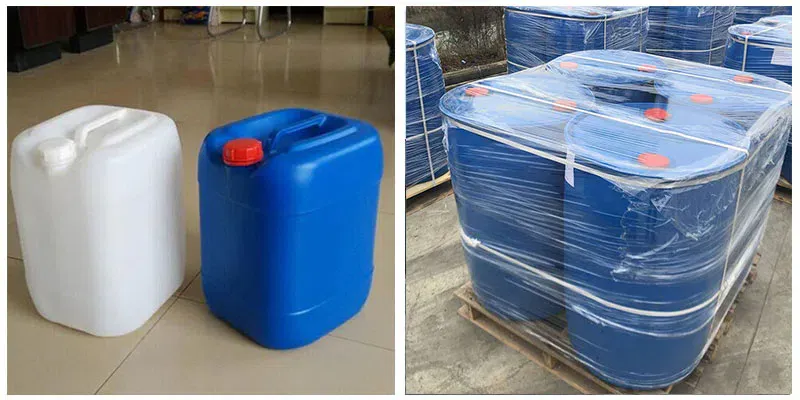
Product Details
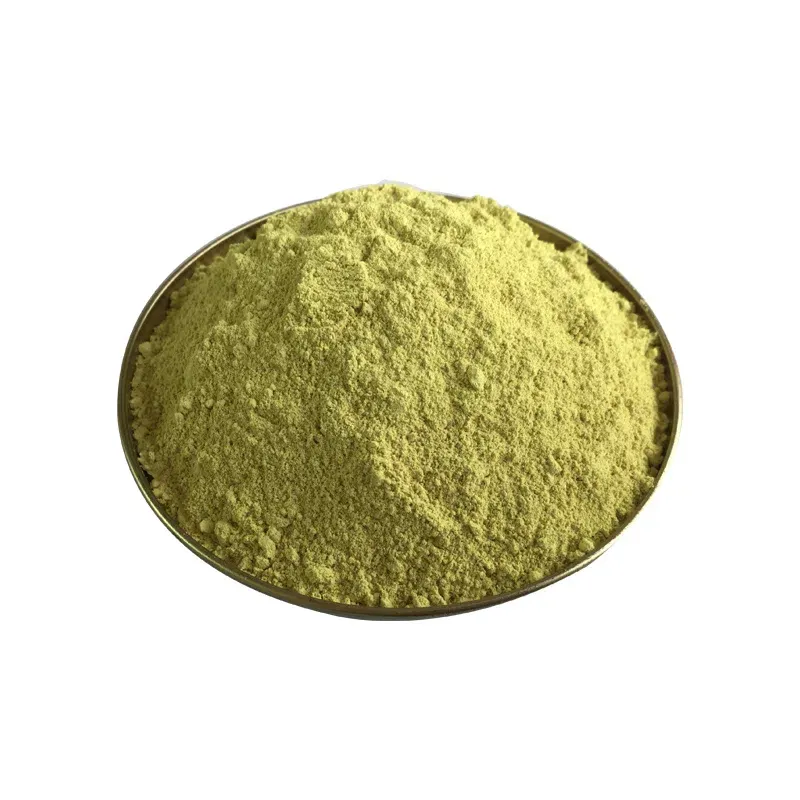
1,4-Benzoquinone, also known as p-benzoquinone, appears as yellow crystalline powder or large yellow monoclinic prisms with a pungent chlorine‑like irritating odor. It has been commercially produced since 1919 and is manufactured in multiple European countries. This compound serves widely as a chemical intermediate, polymerization inhibitor, oxidizing agent, photographic chemical, tanning agent, and laboratory reagent. Its primary application is in hydroquinone production; it is also used in manufacturing rubber accelerators and various oxidation agents. It is extensively used in dye, textile, chemical, tanning, and cosmetic industries. Occupational exposure may occur in these industrial sectors, and inhalation exposure can also come from tobacco smoke. It acts as a key raw material for protein fibers, photographic films, hydrogen peroxide, and gelatin production.

Safety Information
Item | Details |
Hazard Codes | T, N, Xn, F |
Risk Statements | 23/25‑36/37/38‑50‑20/21/22‑11 |
Safety Statements | 26‑28‑45‑61‑28A‑23‑16 |
RIDADR | UN 2587 6.1/PG 2 |
OEB | C |
OEL | TWA: 0.4 mg/m³ (0.1 ppm) |
WGK Germany | 3 |
RTECS | DK2625000 |
F | 8 |
Autoignition Temperature | 815 °F |
TSCA | TSCA listed |
HS Code | 2914 69 80 |
HazardClass | 6.1 |
PackingGroup | II |
Storage Class | 4.1B – Flammable solid hazardous materials |
Hazard Classifications | Acute Tox. 3 Inhalation; Acute Tox. 3 Oral; Aquatic Acute 1; Aquatic Chronic 1; Eye Dam. 1; Flam. Sol. 1; Muta. 2; Skin Corr. 1B; Skin Sens. 1; STOT SE 3 |
Hazardous Substances Data | 106‑51‑4 (Hazardous Substances Data) |
Toxicity | LD50 orally in rats: 130 mg/kg (Woodard) |
1,4-Benzoquinone Chemical Properties
| Property | Value |
| Melting point | 113–115 °C (lit.) |
| Boiling point | 293 °C |
| Bulk density | 700 kg/m³ |
| Density | 1.31 |
| Vapor density | 3.73 (vs air) |
| Vapor pressure | 0.1 mm Hg (25 °C) |
| Refractive index | n20/D 1.453 |
| Fp | 38 °C |
| Storage temp. | Room temp |
| Solubility | 10 g/L |
| pKa | 7.7 |
| Form | Powder |
| Color | Yellow to green |
| Odor | Irritant odor |
| pH | 4 (1 g/L, H₂O, 20 °C) |
| Biological source | Synthetic |
| Water Solubility | 10 g/L (25 °C) |
| Merck | 14, 8074 |
| BRN | 773967 |
| Exposure limits | TLV‑TWA 0.4 mg/m³ (0.1 ppm); STEL 1.2 mg/m³ (0.3 ppm) (ACGIH); IDLH 75 ppm (NIOSH) |
| Stability | Stable, but light sensitive. Incompatible with strong oxidizing agents. Flammable. |
| InChI | 1S/C6H4O2/c7‑5‑1‑2‑6(8)4‑3‑5/h1‑4H |
| InChIKey | AZQWKYJCGOJGHM‑UHFFFAOYSA‑N |
| SMILES | O=C1C=CC(=O)C=C1 |
| LogP | 0.1–0.3 at 23 °C and pH 4.8–5.3 |
| CAS DataBase Reference | 106‑51‑4 (CAS DataBase Reference) |
| NIST Chemistry Reference | p‑Benzoquinone (106‑51‑4) |
| IARC | 3 (Vol. 15, Sup 7, 71) 1999 |
| EPA Substance Registry System | Quinone (106‑51‑4) |
Inventory 2-3 working days New production 7-10 working days