

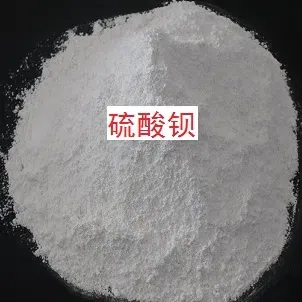
Product Details
- Crystal & Optical Parameters
- Original crystal structure: Orthorhombic crystal, refractive index = 1.637
- Crystal phase transition: Turns into monoclinic crystal when heated to 1149℃, refractive index rises to 1.649
- Density & Thermal Index
- Relative density: 4.5 (measured at 15℃)
- Melting point: 1580℃
- Solubility Performance
- Practically insoluble in pure water: Solubility 0.00022 g/100mL water at 18℃; 0.0041 g/100mL water at 100℃
- Slightly soluble only in highly concentrated sulfuric acid
- Completely insoluble in all conventional organic solvents, dilute inorganic acids and sodium hydroxide alkaline solution
- Chemical Reaction Characteristics
- Reacts with aqueous alkali metal carbonate solutions to precipitate barium carbonate
- High-temperature reduction reaction: Mixed with coal carbon powder and heated to 800℃, it will be reduced into soluble barium sulfide and carbon monoxide gas
Unique Core Feature
Strong X-ray absorption capacity with excellent X-ray opacity; it is the only non-toxic barium salt among all barium inorganic compounds, with no free toxic barium ions dissociated under normal usage conditions
Parameters
| Property | Value |
| Melting point | 1580 °C |
| Boiling point | decomposes at 1580℃ [KIR78] |
| bulk density | 500kg/m3 |
| density | 4.5 |
| storage temp. | Storage temperature: no restrictions. |
| solubility | water: insoluble |
| form | powder |
| color | White to yellow |
| Specific Gravity | 4.5 |
| Odor | wh. or ylsh. fine powd. free from grittiness, odorless, tasteless |
| PH | 3.5-10.0 (100g/l, H2O, 20℃) suspension |
| PH Range | 7 |
| Water Solubility | 0.0022 g/L (50 ºC) |
| Crystal Structure | Barite |
| crystal system | Nogata |
| Merck | 14,994 |
| Solubility Product Constant (Ksp) | pKsp: 9.97 |
| Space group | Pnma |
| Lattice constant | a/nmb/nmc/nmα/oβ/oγ/oV/nm30.89090.54670.7188909090 |
| Dielectric constant | 11.4(16.0℃) |
| Exposure limits | ACGIH: TWA 5 mg/m3 OSHA: TWA 15 mg/m3; TWA 5 mg/m3 NIOSH: TWA 10 mg/m3; TWA 5 mg/m3 |
| Stability: | Stable. |
| Cosmetics Ingredients Functions | COLORANT OPACIFYING |
| LogP | -1.031 (est) |
| CAS DataBase Reference | 7727-43-7(CAS DataBase Reference) |
| EPA Substance Registry System | Barium sulfate (7727-43-7) |
Safety Information
| Item | Details |
| Hazard Codes | Xn |
| Risk Statements | 20/21/22-36/37/38 |
| Safety Statements | 22-24/25-36-26 |
| OEB | B |
| OEL | TWA: 10 mg/m3 (total ) |
| WGK Germany | - |
| RTECS | CR0600000 |
| TSCA | Yes |
| HS Code | 28332700 |
| Hazardous Substances Data | 7727-43-7(Hazardous Substances Data) |
| Toxicity | LD50 orally in Rabbit: > 20000 mg/kg |
Product Application of Barium sulfate CAS#7727-43-7
Two Main Product Grades & Quality Standards
Both Type I and Type II barium sulfate are odorless, tasteless white loose powder, fully insoluble in water, organic solvents, dilute acids and sodium hydroxide solution.
Type I Synthetic Precipitated Barium Sulfate (Blanc Fixe)
- Production route: Chemical synthesis via double displacement reaction of barium chloride and sulfuric acid
- Quality features: Ultra-high purity, uniform ultrafine particle size, low heavy metal & sulfide impurities, high whiteness
- Application orientation: Medical X-ray contrast media, high-gloss automotive coatings, premium printing ink, food-contact plastic filler, electronic precision accessories
Type II Natural Ground Barite Powder
- Raw material source: Purified, crushed and micronized from natural barite mineral ore
- Purity standard: BaSO₄ content ≥97% on dry basis
- Quality features: Cost-effective industrial grade, stable density, good filling performance
- Application orientation: Oil & gas drilling weighting agent, architectural general coatings, ordinary rubber & paper filler, copper smelting flux
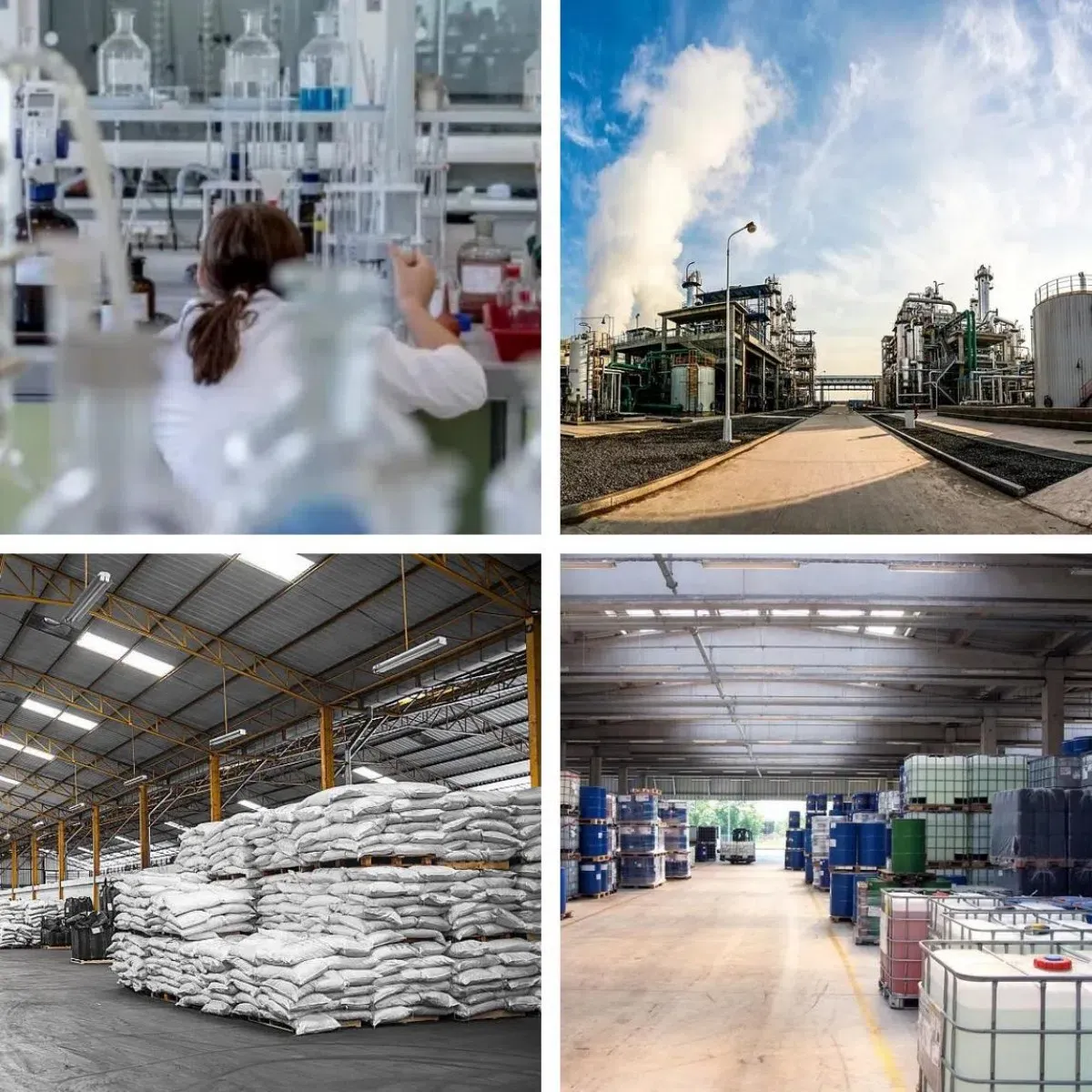
Factory and Equipment Show
Fast delivery time
Inventory 2-3 working days New production 7-10 working days
Multi-Industry Application Fields
Medical & Healthcare Industry
Medical X-ray contrast medium, the core raw material of barium meal for gastrointestinal radiography. Its strong X-ray shielding property enables clear imaging of digestive tract tissues, and its non-toxic characteristic ensures safe oral use.
Coatings, Ink & Pigment Sector
High-performance white functional extender pigment with outstanding weather resistance, anti-aging and covering power, widely used in water-based paint, industrial anti-corrosion coatings, printing inks and art paints.
Plastic, Rubber & Paper Manufacturing
High-quality inorganic filler to improve product surface gloss, hardness, acid-alkali resistance and dimensional stability; effectively reduce raw material cost for plastic masterbatch, rubber parts and coated printing paper.
Oil & Gas Drilling Engineering
High-density weighting agent for water-based and oil-based drilling mud, stabilizes underground formation pressure and prevents well wall collapse during drilling operation.
Metallurgical Processing
Special flux additive for copper smelting and non-ferrous metal refining, optimizing metal melting efficiency.
Laboratory & Fine Chemicals
Standard inorganic analytical reagent for chemical testing experiments.
Electronic & Precision Instrument Industry
Functional radiation-shielding filler for electronic components and precision testing equipment.
FAQ
FAQ 1: Is barium sulfate toxic for medical and industrial production?
Answer: Barium sulfate is the only non-toxic barium salt available in the market. Its extremely low water solubility prevents dissociation of toxic free barium ions in water or human digestive tract, so it is biologically inert and safe for oral medical imaging and food-contact raw material production. In contrast, soluble barium salts such as barium chloride are highly toxic and cannot replace barium sulfate in any application. Medical-grade Type I barium sulfate complies with USP, EP and national pharmacopoeia standards with strictly controlled heavy metal impurities.
FAQ 2: How to choose between Type I synthetic precipitated barium sulfate and Type II natural barite powder?
Answer: The selection depends on your downstream application requirements and cost budget:
- Choose Type I synthetic grade if you engage in high-end scenarios: medical radiography contrast agent, high-gloss automotive paint, premium ink, food-grade plastic filler and electronic precision parts. It features ultra-low impurities, uniform fine particle size and higher whiteness for high-standard finished products.
- Choose Type II natural barite powder for conventional industrial mass production: oil drilling mud weighting agent, general architectural coatings, ordinary rubber and paper filling. It has obvious cost advantages and meets basic industrial filling performance requirements.


