

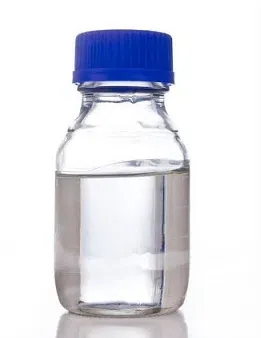
Products Description
Methanol is the simplest aliphatic alcohol. It is a colorless, flammable, irritating liquid with a boiling point of 64.7°C, melting point of -93.90°C, and relative density of 0.7913. It dissolves in water and most organic solvents. It is highly toxic and can damage the optic nerve; ingestion may cause blindness or even death.
Chemical Properties
| Item | Specification |
| Melting point | -97.8°C |
| Melting point | -98 °C(lit.) |
| Boiling point | 64.7°C |
| Boiling point | 65.4 °C(lit.) |
| density | d = 0.89 |
| density | 0.791 g/mL at 25 °C |
| vapor density | 1.11 (vs air) |
| vapor pressure | 410 mm Hg (50 °C) |
| refractive index | n20/D 1.329(lit.) |
| Fp | 52 °F |
| storage temp. | 2-8°C |
| solubility | benzene: miscible(lit.) |
| form | Liquid Free From Particulates |
| pka | 15.2(at 25℃) |
| Specific Gravity | 0.793 (20/20℃) |
| color | <10(APHA) |
| Flame Color | Pale blue |
| Relative polarity | 0.762 |
| PH | 6.8 (20°C in H2O) |
| Odor | Faint alcohol odor detectable at 4 to 6000 ppm (mean = 160 ppm) |
| Odor Threshold | 33ppm |
| explosive limit | 5.5-44%(V) |
| Water Solubility | miscible |
| λmax | λ: 210 nm Amax: 0.50 λ: 220 nm Amax: 0.30 λ: 230 nm Amax: 0.15 λ: 235 nm Amax: 0.10 λ: 240 nm Amax: 0.05 λ: 260 nm Amax: 0.01 λ: 400 nm Amax: 0.01 |
| Merck | 14,5957 |
| BRN | 1098229 |
| Henry's Law Constant | 4.99 at 25 °C (headspace-GC, Gupta et al., 2000) |
| Exposure limits | TLV-TWA (200 ppm) (ACGIH), 260mg/m3, 1040mg/m3 (800 ppm) 15minutes (NIOSH); STEL 310mg/m3 (250 ppm); IDLH 25,000 ppm (NIOSH). |
| Dielectric constant | 33.6(20℃) |
| Cosmetics Ingredients Functions | SOLVENT FRAGRANCE DENATURANT |
| LogP | -0.770 |
| Surface tension | 22.22mN/m at 298.15K |
| Surface tension | 22.7mN/m at 20°C |
| CAS DataBase Reference | 67-56-1(CAS DataBase Reference) |
| NIST Chemistry Reference | Methyl alcohol(67-56-1) |
| EPA Substance Registry System | Methanol (67-56-1) |
| Absorption | in accordance |
Safety Information
| Item | Specification |
| Hazard Codes | Xn,T,F |
| Risk Statements | 10-20/21/22-68/20/21/22-39/23/24/25-23/24/25-11-40-36-36/38-23/25 |
| Safety Statements | 36/37-7-45-16-24/25-23-24-26 |
| RIDADR | UN 1170 3/PG 2 |
| OEB | A |
| OEL | TWA: 200 ppm (260 mg/m3), STEL: 250 ppm (325 mg/m3) [skin] |
| WGK Germany | 1 |
| RTECS | PC1400000 |
| F | 3-10 |
| Autoignition Temperature | 385 °C |
| TSCA | Yes |
| HS Code | 2905 11 00 |
| HazardClass | 3 |
| PackingGroup | II |
| Hazardous Substances Data | 67-56-1(Hazardous Substances Data) |
| Toxicity | LD50 oral (rat) 5628 mg/kg LD50 skin (rabbit) 15,840 mg/kg LC50 inhal (rat) >145,000 ppm (1 h) PEL (OSHA) 200 ppm (260 mg/m3) TLV-TWA (ACGIH) 200 ppm (260 mg/m3)—skin STEL (ACGIH) 250 ppm (328 mg/m3) |
| IDLA | 6,000 ppm |
Product Application
Methanol is a key raw material for fine chemicals. Under 3.5 MPa and 180–200°C with catalyst, its carbonylation yields acetic acid and further acetic anhydride. It reacts with syngas to form vinyl acetate; with isobutylene to produce tert-butyl methyl ether. It forms dimethyl oxalate via oxidation and carbonylation, then ethylene glycol by hydrogenation. It reacts with toluene under catalytic oxidation to make phenylethyl alcohol.
Supply & Delivery
Fast delivery time
Inventory: 2-3 working days
New production: 7-10 working days


