

Product Details
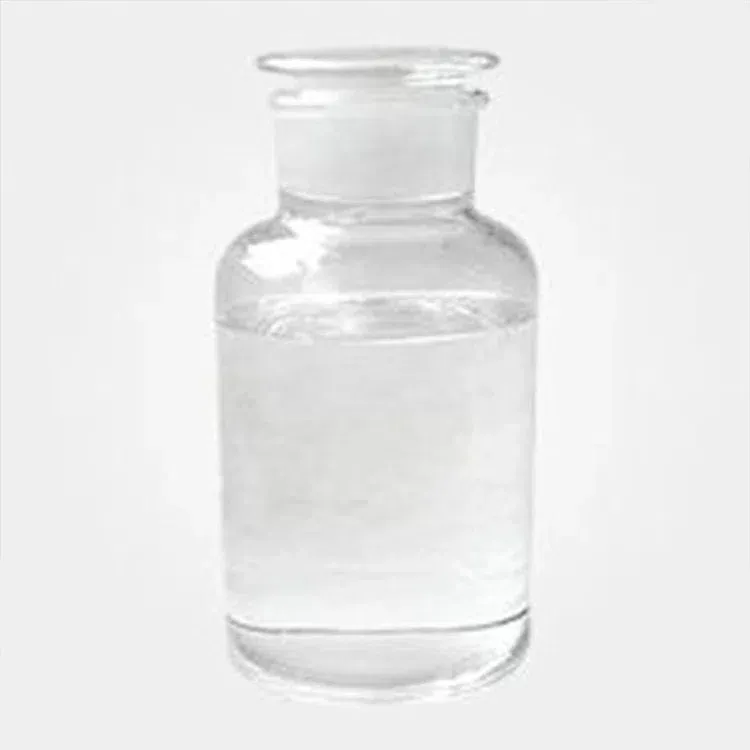
Morpholine CAS#110-91-8
Morpholine is a colorless liquid with a weak ammonia or fish‑like odor. The odor detection threshold is 0.01 ppm. Molecular weight: 87.14; specific gravity (H₂O=1): 1.007; boiling point: 128.9 °C; melting/freezing point: -4.9 °C; vapor pressure: 6 mmHg at 20 °C; flash point: 37 °C; autoignition temperature: 310 °C. Explosive limits: LEL 1.4%, UEL 11.2%. NFPA‑704 hazard rating: Health 3, Flammability 3, Reactivity 0. It is soluble in water.
Parameters
| Property | Value |
| Melting point | -7--5 °C (lit.) |
| Boiling point | 126.0-130.0 °C 129 °C (lit.) |
| density | 0.996 g/mL at 25 °C (lit.) |
| vapor density | 3 (vs air) |
| vapor pressure | 31 mm Hg (38 °C) |
| refractive index | n20/D 1.454(lit.) |
| Fp | 96 °F |
| storage temp. | Store below +30°C. |
| solubility | water: miscible |
| form | Liquid |
| pka | 8.33(at 25℃) |
| Specific Gravity | 0.996 |
| color | APHA: ≤15 |
| Odor | Characteristic amine-like odor |
| PH | 11.2 (H2O)(undiluted) |
| explosive limit | 1.4-15.2%(V) |
| Water Solubility | MISCIBLE |
| FreezingPoint | -4.9℃ |
| Sensitive | Hygroscopic |
| Merck | 14,6277 |
| BRN | 102549 |
| Exposure limits | TLV-TWA 20 ppm (~70 mg/m3) (ACGIH, MSHA, and OSHA); STEL skin 30 ppm (ACGIH); IDLH 8000 ppm. |
| Dielectric constant | 7.3(25℃) |
| Stability: | Stable. Flammable. Incompatible with strong oxidizing agents, strong acids, acid chlorides, acid anhydrides. Hygroscopic. |
| Cosmetics Ingredients Functions | BUFFERING |
| InChIKey | YNAVUWVOSKDBBP-UHFFFAOYSA-N |
| LogP | -0.860 |
| CAS DataBase Reference | 110-91-8(CAS DataBase Reference) |
| IARC | 3 (Vol. 47, 71) 1999 |
| NIST Chemistry Reference | Morpholine(110-91-8) |
| EPA Substance Registry System | Morpholine (110-91-8) |
Safety Information
| Item | Details |
| Hazard Codes | C |
| Risk Statements | 10-20/21/22-34 |
| Safety Statements | 23-36-45 |
| OEB | A |
| OEL | TWA: 20 ppm (70 mg/m3), STEL: 30 ppm (105 mg/m3) [skin] |
| RIDADR | UN 2054 8/PG 1 |
| WGK Germany | 3 |
| RTECS | QD6475000 |
| Autoignition Temperature | 590 °F |
| TSCA | Yes |
| HS Code | 2934 99 90 |
| HazardClass | 8 |
| PackingGroup | I |
| Hazardous Substances Data | 110-91-8(Hazardous Substances Data) |
| Toxicity | LD50 orally in female rats: 1.05 g/kg (Smyth) |
| IDLA | 1,400 ppm [10% LEL] |
Product Application of Morpholine CAS#110-91-8
1. Used in pharmaceuticals and as a raw material for rubber accelerators and optical brighteners.
2. Serves as an intermediate for fungicides dimethomorph, flumorpholine, and organophosphate insecticide phosalphos.
3. Primarily used to produce rubber vulcanization accelerators; also applied in surfactants, textile auxiliaries, pharmaceuticals, and pesticide synthesis.
4. Acts as a butadiene polymerization catalyst, corrosion inhibitor, and optical bleach; solvent for dyes, resins, waxes, glues, and casein. Global annual production capacity is about 3–4 million tons.
5. Morpholine salts are widely used. Examples like morpholine hydrochloride (10024-89-2) are organic synthesis intermediates. Morpholine fatty acid salts can be used as fruit/vegetable coating agents to reduce respiration and water loss.
6. Key raw material for accelerator NOBS. Used as an analytical reagent and solvent for resins, waxes, shellac; also used in sodium sulfate, water glass, ultramarine, glass, paper, detergents, soaps, dyes, synthetic fibers, tanning, pharmaceuticals, and ceramics.
7. Used as an analytical reagent and solvent for resins, waxes, casein, shellac, and various other substances.
8. Reacts with inorganic acids to form salts; reacts with organic acids to form salts or amides. Undergoes alkylation and reacts with ethylene oxide in ketone or Willgerodt reactions.
Factory and Equipment Show
Fast delivery time
Inventory: 2–3 working days
New production: 7–10 working days


