

Product Details
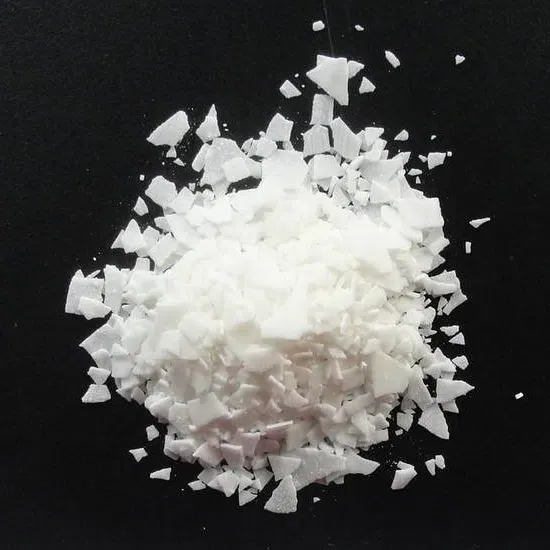
Phthalic anhydride is the dehydrated derivative of phthalic acid, with its condensed structural formula expressed as C₆H₄(CO)₂O. This crystalline chemical maintains stable physical traits under normal storage environment. It hardly dissolves in cold water yet hydrolyzes rapidly in hot water to revert into phthalic acid; the product is miscible and soluble in conventional organic solvents such as ethanol and benzene.
Phthalic anhydride Chemical Properties
| Item | Value |
| Melting point | 131-134 °C(lit.) |
| Boiling point | 284 °C(lit.) |
| bulk density | 500-700kg/m3 |
| density | 1.53 g/cm3 |
| vapor density | 5.1 (vs air) |
| vapor pressure | <0.01 mm Hg (20 °C) |
| refractive index | 1.4500 (estimate) |
| Fp | 152 °C |
| storage temp. | Store below +30°C. |
| solubility | 6g/l (slow decomposition) |
| form | Flaky Crystals |
| pka | 2.97[at 20 ℃] |
| color | White |
| Odor | Characteristic choking odor |
| PH | 2 (6g/l, H2O, 20℃) |
| PH Range | 2 at 6 g/l at 20 °C |
| explosive limit | 1.7-10.5%(V) |
| Water Solubility | 6 g/L (20 ºC) |
| Sensitive | Moisture Sensitive |
| Merck | 14,7372 |
| BRN | 118515 |
| Henry's Law Constant | 6.29 at 20 °C (approximate - calculated from water solubility and vapor pressure) |
| Exposure limits | NIOSH REL: TWA 6 mg/m3 (1 ppm), IDLH 60 mg/m3; OSHA PEL: TWA 12 mg/m3 (2 ppm); ACGIH TLV: TWA 1 ppm (adopted). |
| Stability | Stable. Combustible. Incompatible with strong oxidizing agents, strong bases, moisture, strong acids. Dust may form an explosive mixture with air. |
| Cosmetics Ingredients Functions | NOT REPORTED |
| InChI | 1S/C8H4O3/c9-7-5-3-1-2-4-6(5)8(10)11-7/h1-4H |
| InChIKey | LGRFSURHDFAFJT-UHFFFAOYSA-N |
| SMILES | O=C1OC(=O)c2ccccc12 |
| LogP | 2.07 at 20℃ |
| CAS DataBase Reference | 85-44-9(CAS DataBase Reference) |
| NIST Chemistry Reference | Phthalic anhydride(85-44-9) |
| EPA Substance Registry System | Phthalic anhydride (85-44-9) |
Safety Information
| Item | Value |
| Hazard Codes | Xn |
| Risk Statements | 22-37/38-41-42/43 |
| Safety Statements | 23-24/25-26-37/39-46-22 |
| RIDADR | 2214 |
| OEB | B |
| OEL | TWA: 6 mg/m3 (1 ppm) |
| WGK Germany | 1 |
| RTECS | TI3150000 |
| F | 10-21 |
| Autoignition Temperature | 580 °C |
| TSCA | TSCA listed |
| HazardClass | 8 |
| PackingGroup | III |
| HS Code | 29173500 |
| Storage Class | 11 - Combustible Solids |
| Hazard Classifications | Acute Tox. 4 Oral; Eye Dam. 1; Resp. Sens. 1; Skin Irrit. 2; Skin Sens. 1; STOT SE 3 |
| Hazardous Substances Data | 85-44-9(Hazardous Substances Data) |
| Toxicity | LD50 orally in Rabbit: 1530 mg/kg LD50 dermal Rabbit > 3160 mg/kg |
| IDLA | 60 mg/m3 |
Product Application Of Phthalic anhydride CAS#85-44-9
As a core bulk organic industrial raw material, phthalic anhydride occupies an irreplaceable position in modern chemical production, with its primary usages sorted as below:
- It is the dominant feedstock for mass production of plasticizers, which are essential additives for all types of plastic finished goods; besides plasticizer production, it is also widely adopted to synthesize alkyd resins, unsaturated polyester resins, industrial dyes and fine chemical intermediates.
- It undergoes chemical condensation reaction with cellulose acetate to generate Cellulose Acetate Phthalate (CAP). CAP is a standard enteric coating excipient in pharmaceutical industry and comes with inherent antiviral effects. Conversely, phthalic anhydride can also be separated out as a degradation by-product when CAP decomposes under specific conditions.
Fast delivery time
Inventory 2-3 working days
New production 7-10 working days


