

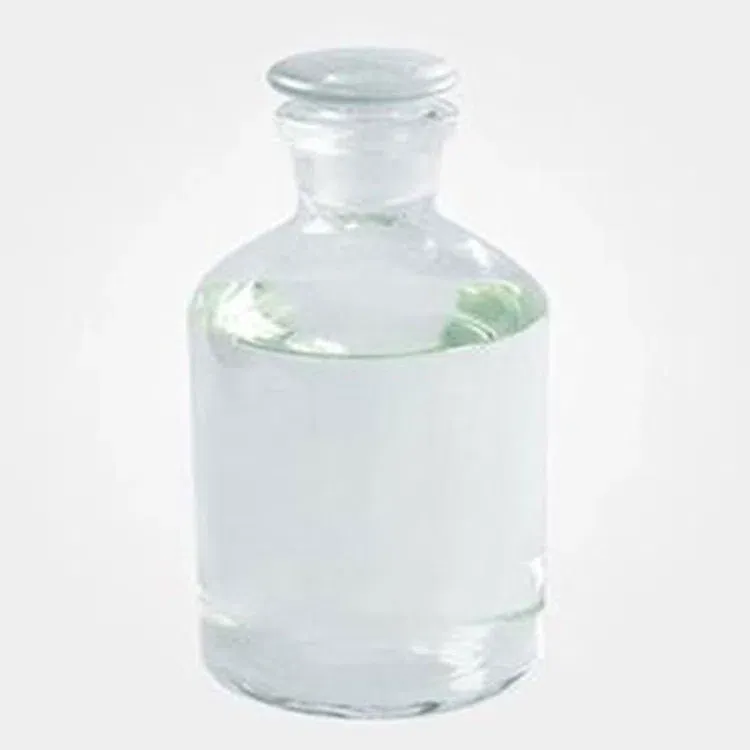
Products Description
Glycerol, also widely referred to as Glycerin or Glycerine in commercial markets, is a naturally occurring trihydric alcohol. The term "Glycerol" is generally used to define the pure chemical compound, while Glycerin and Glycerine are the common names for commercial-grade products used across industrial and daily use scenarios.
This substance features distinct sweet taste and strong hygroscopic properties. It shows excellent physical and chemical stability under normal ambient conditions.
- Melting Point: 18.17 °C
- Boiling Point: 290 °C
- Relative Density: 1.261 g/cm³ (20 °C)
- Solubility: Fully miscible with water and alcohols; slightly soluble in common organic solvents; practically insoluble in oils, fats and hydrocarbons
- Viscosity: High viscosity at room temperature
- Odor: Odorless

Chemical Properties
| Item | Value |
| Melting point | 20 °C(lit.) |
| Boiling point | 290 °C |
| density | 1.25 g/mL(lit.) |
| vapor density | 3.1 (vs air) |
| vapor pressure | <1 mm Hg ( 20 °C) |
| refractive index | n20/D 1.474(lit.) |
| FEMA | 2525 |
| Fp | 320 °F |
| storage temp. | Store at +5°C to +30°C. |
| solubility | H2O: 5 M at 20 °C, clear, colorless |
| pka | 14.15(at 25℃) |
| form | Viscous Liquid |
| color | APHA: ≤10 |
| Specific Gravity | 1.265 (15/15℃)1.262 |
| Odor | Odorless. |
| PH Range | 5.5 - 8 |
| PH | 5.5-8 (25℃, 5M in H2O) |
| explosive limit | 2.6-11.3%(V) |
| Odor Type | odorless |
| biological source | synthetic (organic) |
| Water Solubility | >500 g/L (20 ºC) |
| Sensitive | Hygroscopic |
| λmax | λ: 260 nm Amax: 0.05 λ: 280 nm Amax: 0.04 |
| Merck | 14,4484 |
| JECFA Number | 909 |
| BRN | 635685 |
| Dielectric constant | 47.0(Ambient) |
| Exposure limits | OSHA: TWA 15 mg/m3; TWA 5 mg/m3 |
| Stability: | Stable. Incompatible with perchloric acid, lead oxide, acetic anhydride, nitrobenzene, chlorine, peroxides, strong acids, strong bases. Combustible. |
| Cosmetics Ingredients Functions | HUMECTANT SKIN CONDITIONING - HUMECTANT DENATURANT FRAGRANCE SOLVENT SKIN PROTECTING VISCOSITY CONTROLLING PERFUMING ORAL CARE HAIR CONDITIONING |
| InChIKey | PEDCQBHIVMGVHV-UHFFFAOYSA-N |
| LogP | -2.32 |
| Surface tension | 64mN/m at 20°C |
| CAS DataBase Reference | 56-81-5(CAS DataBase Reference) |
| NIST Chemistry Reference | 1,2,3-Propanetriol(56-81-5) |
| EPA Substance Registry System | Glycerine (56-81-5) |
| Absorption | ≤0.02 at 280nm in H2O at 0.5M ≤0.07 at 260nm in H2O at 0.5M |
Safety Information
| Item | Value |
| Hazard Codes | F,Xn |
| Risk Statements | 36-20/21/22-11 |
| Safety Statements | 24/25-39-26 |
| RIDADR | UN 1282 3/PG 2 |
| WGK Germany | 1 |
| RTECS | MA8050000 |
| F | 3 |
| Autoignition Temperature | 698 °F |
| TSCA | TSCA listed |
| HS Code | 29054500 |
| Hazardous Substances Data | 56-81-5(Hazardous Substances Data) |
| Toxicity | LD50 in rats (ml/kg): >20 orally; 4.4 i.v. (Bartsch) |
Product Application
Glycerol is a versatile industrial raw material and auxiliary agent with broad application coverage in chemical manufacturing, daily chemicals, food industry and other professional fields.
Chemical Industry
It acts as an essential raw material for synthesizing nitroglycerin, glyceryl acetate, various surfactants, natural and synthetic flavors, alkyd resins and ester gums. It is also a standard ingredient in different antifreeze formulations for industrial systems.
Daily Chemical & Printing Industry
Widely adopted in the production of cosmetics and printing inks, functioning as a moisturizer, solvent and viscosity regulator to optimize product performance and texture.
Food Industry
It serves multiple functional roles in food processing:
- Acts as an effective humectant to maintain moisture and soft texture of bread, cakes and other baked goods;
- Works as a carrier solvent for food flavors, pigments and water-soluble preservatives;
- Used as a thickening agent for beverages and wine products;
- Serves as a plasticizer for candies, desserts and meat products;
- Applied as a natural sweetener in various food formulas.
Other Professional Applications
It can be used as a stationary phase for gas chromatographic analysis in laboratory and analytical testing work.
Supply & Delivery
Fast delivery time
Inventory: 2-3 working days
New production: 7-10 working days


