

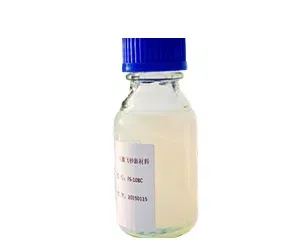
Products Description
Various isocyanates are employed in the synthesis of polyurethane, including tolylene diisocyanate, hexamethylene diisocyanate, and dicyclohexylmethane diisocyanate. Most of these compounds are low‑viscosity liquids at room temperature, except for 4,4‑diphenylmethane diisocyanate (MDI), which exists as a crystalline solid. Aromatic isocyanates exhibit higher reactivity than aliphatic types and are widely used in the production of urethane foams, coatings, and elastomers. The cyclic structures present in aromatic and alicyclic isocyanates enhance the molecular rigidity of the final polyurethane materials.
Chemical Properties
| Item | Specification |
| bulk density | 0.08g/cm3 |
| form | foam |
| Stability | Stable. Combustible. Incompatible with strong oxidizing agents. |
| InChI | InChI=1S/C3H8N2O/c1-2-5-3(4)6/h2H2,1H3,(H3,4,5,6) |
| InChIKey | RYECOJGRJDOGPP-UHFFFAOYSA-N |
| SMILES | N(CC)C(N)=O |
| CAS DataBase Reference | 9009-54-5 |
| IARC | 3 (Vol. 19, Sup 7) 1987 |
Product Application
Polyurethane resins and foams represent important industrial polymeric materials. They can be manufactured as rigid, semi‑rigid or flexible foams and resins, delivering versatile performance for numerous commercial applications. Polyurethane is widely used in furniture, bedding, automotive gaskets, adhesives, carpets, packaging materials and coatings. It offers excellent resistance to oils, light and solvents, combined with high mechanical strength and flexibility. These polymers are formed via polyaddition reactions between diisocyanates and polyhydroxy compounds such as polyols.
Supply & Delivery
Fast delivery time
Inventory: 2-3 working days
New production: 7-10 working days


