

Product Details
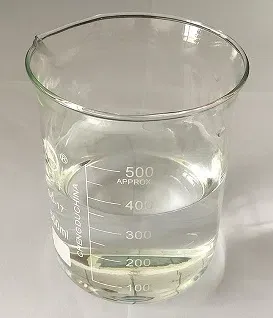
Trichloroethylene (IUPAC name: trichloroethene) is a stable, low-boiling-point, clear liquid that features a sweet, chloroform‑like odor. It shows no corrosive action on common metals even under humid conditions. It dissolves only slightly in water and is classified as non‑flammable. Inhalation exposure poses toxic risks; its threshold limit value (TLV) is 50 ppm, and immediate danger to life or health (IDLH) is set at 1000 ppm in air. The U.S. FDA has banned its application in food items, pharmaceutical products, and cosmetic formulations. Its four‑digit UN number is 1710. According to NFPA 704 labeling, it carries health rating 2, flammability rating 1, and reactivity rating 0. Major industrial uses include metal degreasing operations, dry‑cleaning processes, refrigerant manufacturing, fumigant production, and electronic component drying.
Parameters
| Property | Value |
| Melting point | -86 °C |
| Boiling point | 87 °C |
| density | 1.463 g/mL at 25 °C(lit.) |
| vapor density | 4.5 (vs air) |
| vapor pressure | 61 mm Hg ( 20 °C) |
| refractive index | n20/D 1.476(lit.) |
| Fp | 90°C |
| storage temp. | 2-8°C |
| solubility | Soluble in acetone, ethanol, chloroform, ether (U.S. EPA, 1985), and other organic solvents including bromoform, carbon tetrachloride, methylene chloride, trichloroethylene, and tetrachloroethylene. |
| form | Liquid |
| color | Clear colorless |
| Odor | Chloroform-like; ethereal. |
| Odor Threshold | 3.9ppm |
| explosive limit | 7.9-99% (v/v) Saturation - at high volume fractions, explosion turns into a decomposition reaction) |
| Water Solubility | Slightly soluble. 0.11 g/100 mL |
| Merck | 14,9639 |
| BRN | 1736782 |
| Henry's Law Constant | 3.14 at 1.8 °C, 8.47 at 21.6 °C, 19.0 at 40.0 °C, 26.5 at 50 °C, 35.8 at 60 °C, 56.6 at 70 °C (EPICS-GC, Shimotori and Arnold, 2003) |
| Dielectric constant | 3.4(16℃) |
| Exposure limits | TLV-TWA 50 ppm (~270 mg/m3) (ACGIH), 100 ppm (MSHA and OSHA); TLV-STEL 200 ppm (ACGIH); ceiling 200 ppm (OSHA); carcinogenicity: Animal Limited Evidence, Human Inadequate Evidence (IARC). |
| Stability: | Stable. Incompatible with oxidizing agents, aluminium, magnesium, strong bases, reducing agents. Light-sensitive. Reacts violently with many metals, ozone, potassium nitrate, potassium hydroxide, sodium hydroxide . |
| InChI | 1S/C2HCl3/c3-1-2(4)5/h1H |
| InChIKey | XSTXAVWGXDQKEL-UHFFFAOYSA-N |
| SMILES | Cl\C=C(\Cl)Cl |
| LogP | 2.53 at 20℃ |
| CAS DataBase Reference | 79-01-6(CAS DataBase Reference) |
| IARC | 1 (Vol. Sup 7, 63, 106) 2014 |
| NIST Chemistry Reference | Trichloroethylene(79-01-6) |
| EPA Substance Registry System | Trichloroethylene (79-01-6) |
Safety Information
| Item | Details |
| Hazard Codes | T,F |
| Risk Statements | 45-36/38-52/53-67-68-39/23/24/25-23/24/25-11 |
| Safety Statements | 53-45-61-36/37-16-7 |
| RIDADR | UN 1710 6.1/PG 3 |
| OEB | B |
| OEL | TWA: 25.0 ppm, STEL: 2.0 ppm |
| WGK Germany | 3 |
| RTECS | KX4550000 |
| Autoignition Temperature | 770°F |
| TSCA | TSCA listed |
| HazardClass | 6.1 |
| PackingGroup | III |
| HS Code | 29032200 |
| Storage Class | 6.1D - Non-combustible acute toxic Cat.3 toxic hazardous materials or hazardous materials causing chronic effects |
| Hazard Classifications | Aquatic Chronic 3; Carc. 1B; Eye Irrit. 2; Muta. 2; Skin Irrit. 2; Skin Sens. 1B; STOT SE 3 |
| Hazardous Substances Data | 79-01-6(Hazardous Substances Data) |
| Toxicity | LD50 orally in rats: 4.92 ml/kg; LC (4 hrs) in rats: 8000 ppm (Smyth) |
| IDLA | 1,000 ppm |
Product Application
As a chlorinated hydrocarbon compound, trichloroethylene serves as a detergent and solvent for metals, oils, resins, and sulfur. It is widely used as a general degreasing agent in industrial settings. Skin contact may trigger irritant dermatitis, widespread rash, Stevens-Johnson syndrome, pustular or bullous skin lesions, and scleroderma.
Fast delivery time
Inventory 2-3 working days New production 7-10 working days.


