

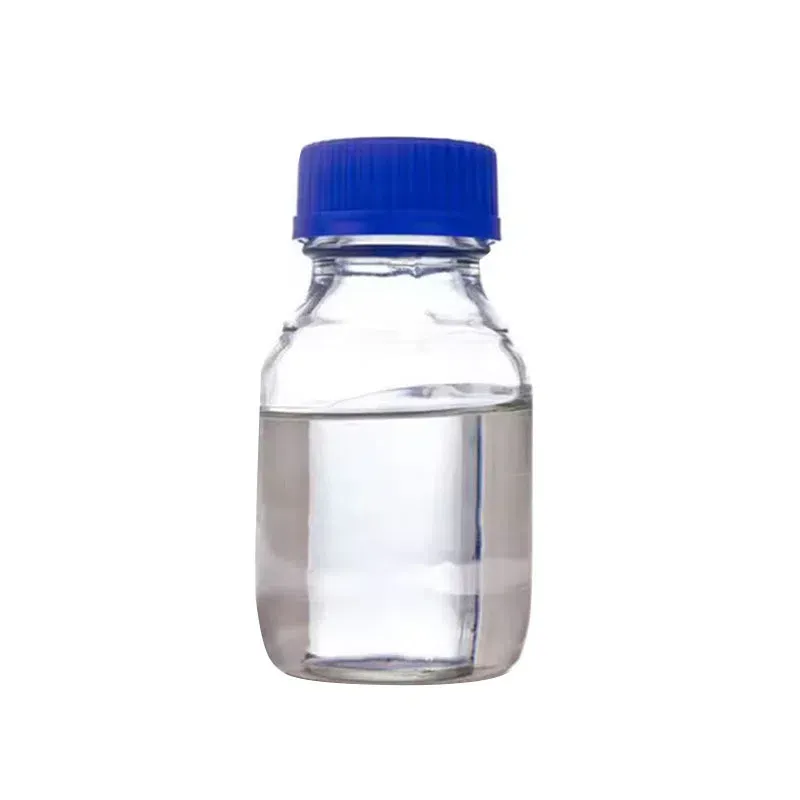
Products Description of Methyl methacrylate CAS# 80-62-6
This product is a volatile colorless liquid with a characteristic pungent odor. It has excellent fluidity and typical properties of acrylate monomers. It is slightly soluble in water, and fully miscible with most common organic solvents such as ethanol, ether, acetone and aromatic hydrocarbons.
It features good chemical reactivity under normal conditions, and tends to undergo polymerization when exposed to heat, light or initiators. For long-term storage, proper stabilizers are required to prevent self-polymerization.
Introduction to Polymethyl Methacrylate (PMMA)
Methyl methacrylate is the core monomer for producing Polymethyl Methacrylate (PMMA), commonly known as plexiglass. As a vital amorphous transparent polymer, PMMA is one of the most widely used optical transparent plastics in the industry.
Thanks to its uniform internal molecular structure, light can pass through the material stably without scattering or interference, endowing PMMA with outstanding optical transmittance. In addition, it possesses multiple superior properties including good impact resistance, low weight, cost-effectiveness, environmental friendliness and non-toxicity. Due to these advantages, PMMA has become a mainstream ideal substitute for traditional glass materials and is well recognized across various sectors.
Parameters
| Parameter | Value |
| Melting point | -48 °C (lit.) |
| Boiling point | 100 °C (lit.) |
| density | 0.936 g/mL at 25 °C (lit.) |
| vapor density | 3.5 (vs air) |
| vapor pressure | 29 mm Hg (20 °C) |
| refractive index | n20/D 1.414(lit.) |
| FEMA | 4002 | METHYL 2-METHYL-2-PROPENOATE |
| Fp | 50 °F |
| storage temp. | 2-8°C |
| solubility | 15g/l |
| form | Crystalline Powder or Crystals |
| color | White to pale yellow |
| Odor | at 0.10 % in dipropylene glycol. acrylic aromatic fruity |
| Odor Type | acrylate |
| biological source | synthetic |
| Odor Threshold | 0.21ppm |
| explosive limit | 2.1-12.5%(V) |
| Water Solubility | 15.9 g/L (20 ºC) |
| Merck | 14,5941 |
| JECFA Number | 1834 |
| BRN | 605459 |
| Henry's Law Constant | 2.46 x 10^-4 atm·m^3 /mol at 20 °C (approximate - calculated from water solubility and vapor pressure) |
| Exposure limits | NIOSH REL: TWA 100 ppm (410 mg/m^3 ), IDLH 1,000 ppm; OSHA PEL: TWA 100 ppm; ACGIH TLV: TWA 100 ppm with intended TWA and STEL values of 50 and 100 ppm, respectively. |
| Dielectric constant | 2.9(20℃) |
| Stability: | Volatile |
| InChIKey | VVQNEPGJFQJSBK-UHFFFAOYSA-N |
| LogP | 1.38 at 20℃ |
| CAS DataBase Reference | 80-62-6(CAS DataBase Reference) |
| NIST Chemistry Reference | 2-Propenoic acid, 2-methyl-, methyl ester(80-62-6) |
| IARC | 3 (Vol. Sup 7, 60) 1994 |
| EPA Substance Registry System | Methyl methacrylate (80-62-6) |
Safety Information
| Item | Details |
| Hazard Codes | F,Xi,T |
| Risk Statements | 11-37/38-43-39/23/24/25-23/24/25 |
| Safety Statements | 24-37-46-45-36/37-16-7 |
| RIDADR | UN 1247 3/PG 2 |
| OEB | A |
| OEL | TWA: 100 ppm (410 mg/m3) |
| WGK Germany | 1 |
| RTECS | OZ507500 |
| Autoignition Temperature | 815 °F |
| TSCA | Yes |
| HazardClass | 3 |
| PackingGroup | II |
| HS Code | 29161410 |
| Hazardous Substances Data | 80-62-6(Hazardous Substances Data) |
Product Application of Methyl methacrylate CAS# 80-62-6
- Primary usage: Serving as the key monomer for manufacturing organic glass (PMMA), covering various PMMA finished products and semi-finished materials.
- Industrial raw material: Applied for the synthesis of a variety of modified plastics, synthetic resins and polymer materials.
- Auxiliary material: Widely used in the production of industrial coatings, adhesives, printing inks and other chemical products.
- Extended application: Also adopted in the fields of optical components, daily chemical products, building materials and electronic accessories.
Fast delivery time
Inventory 2-3 working days
New production 7-10 working days


