

Product Details
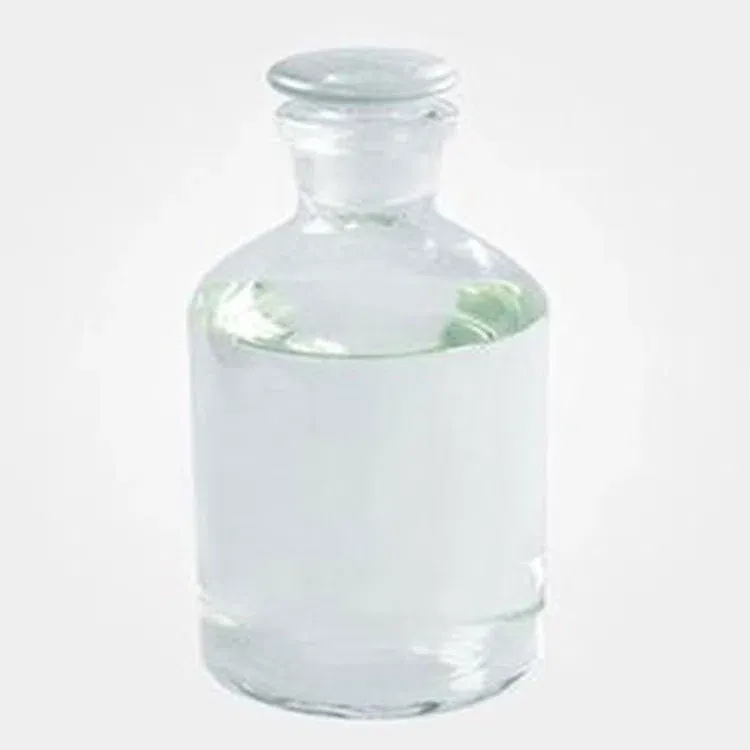
Diisopropylamine is classified as a secondary amine. It has a characteristic unpleasant odor resembling fish and ammonia.
- Melting Point: -61 °C
- Boiling Point: 84 °C
- Relative Density (20 °C): 0.716
- Refractive Index (20 °C): 1.392
- Flash Point (Closed Cup): -7 °C
- Vapor Pressure (20 °C): 6.67 kPa
- Solubility: Miscible with water, ethanol, ether and most common organic solvents
- Chemical Stability: Stable under normal ambient conditions; reactive with strong acids, oxidizing agents and halogens
Diisopropylamine Chemical Properties
| Property | Value |
| Melting point | -61 °C (lit.) |
| Boiling point | 84 °C (lit.) |
| density | 0.722 g/mL at 25 °C (lit.) |
| vapor density | 3.5 (vs air) |
| vapor pressure | 50 mm Hg (20 °C) |
| refractive index | n20/D 1.392(lit.) |
| Fp | 1.4 °F |
| storage temp. | Store below +30°C. |
| solubility | 100 g/L (20°C) |
| form | Liquid |
| pka | 11.05(at 25℃) |
| color | Clear colorless |
| PH | 11.8 (6g/l, H2O, 20℃) |
| Odor | Amine. |
| explosive limit | 1.1-7.1%(V) |
| Water Solubility | 100 g/L (20 ºC) |
| Merck | 14,3196 |
| BRN | 605284 |
| Exposure limits | NIOSH REL: TWA 5 ppm (20 mg/m3), IDLH 200 ppm; OSHA PEL: TWA 5 ppm; ACGIH TLV: TWA 5 ppm (adopted). |
| Dielectric constant | 3.04 |
| Stability: | Stable. Flammable. Incompatible with strong oxidizing agents. May react violently with strong acids or oxidizers. Air sensitive. |
| Cosmetics Ingredients Functions | BUFFERING |
| InChIKey | UAOMVDZJSHZZME-UHFFFAOYSA-N |
| LogP | 0.4 at 20℃ |
| CAS DataBase Reference | 108-18-9(CAS DataBase Reference) |
| NIST Chemistry Reference | 2-Propanamine, N-(1-methylethyl)-(108-18-9) |
| EPA Substance Registry System | Diisopropylamine (108-18-9) |
Safety Information
| Item | Value |
| Hazard Codes | F,C |
| Risk Statements | 11-20/22-34 |
| Safety Statements | 16-26-36/37/39-45 |
| RIDADR | UN 1158 3/PG 2 |
| OEB | A |
| OEL | TWA: 5 ppm (20 mg/m3) [skin] |
| WGK Germany | 2 |
| RTECS | IM4025000 |
| Autoignition Temperature | 599 °F |
| Hazard Note | Highly Flammable/Corrosive/Harmful |
| TSCA | TSCA listed |
| HS Code | 2921 19 99 |
| HazardClass | 3 |
| PackingGroup | II |
| Hazardous Substances Data | 108-18-9(Hazardous Substances Data) |
| Toxicity | LD50 orally in rats: 0.77 g/kg (Smyth) |
| IDLA | 200 ppm |
Product Application Of DiisopropylamineCAS#108-18-9
Product Description
This compound is a typical aliphatic secondary amine with high volatility. It naturally exists in tobacco, and also forms as a pyrolysis product in tobacco smoke. Additionally, it is used as an additive in certain tobacco-related products. Thanks to its unique chemical structure and reactivity, it serves as an essential raw material widely adopted across multiple industrial sectors.
Main Applications
Pesticide & Pharmaceutical Industry
It acts as a vital chemical intermediate and reaction catalyst for the manufacturing of various pesticides and pharmaceutical products.
Solvent & Organic Synthesis
Widely applied as an effective organic solvent, and extensively used in organic synthesis processes to produce dyes, pharmaceutical chemicals and a broad range of fine chemicals.
Special Intermediate Synthesis
It is a fundamental building block for the preparation of multiple high-value chemical intermediates, including diisopropylamine methyl urea (DMU), N,N-diisopropyl quinoline-2-carboxamide, 3-N-sulfonylamidine coumarins and N-chloroamine. These derived substances are key intermediates for amide compound production.
Supply & Delivery
Fast delivery time
Inventory: 2–3 working days
New production: 7–10 working days


