

Products Description
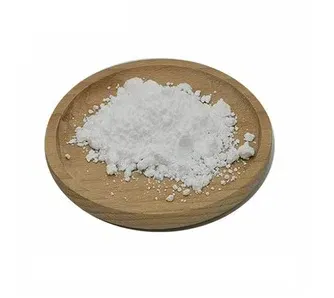
Benzoic acid represents the most basic aromatic carboxylic acid substance. Classified as a mild organic acid, it acts as an essential raw material in the synthesis of numerous vital organic chemical products. Over ninety percent of industrial-grade benzoic acid on the market is further converted into phenol and caprolactam raw materials. Its utilization for synthesizing glycol benzoates applied as plasticizer ingredients within adhesive formulations is steadily expanding. Apart from that, this chemical substance can also be adopted for the preparation of alkyd resin materials as well as functional additives used in crude oil mining drilling fluids.
Chemical Properties
| Item | Specification |
| Melting point | 121-125 °C(lit.) |
| Boiling point | 249 °C(lit.) |
| bulk density | 500kg/m3 |
| density | 1.08 |
| vapor density | 4.21 (vs air) |
| vapor pressure | 10 mm Hg (132 °C) |
| refractive index | 1.504 |
| FEMA | 2131 |
| Fp | 250 °F |
| storage temp. | 2-8°C |
| solubility | soluble, clear, colorless (95% ethanol, 1gm/3mL) |
| pka | 4.19(at 25℃) |
| form | Solid |
| color | White to yellow-beige to orange |
| Odor | at 100.00 %. faint balsam urine |
| PH | 3.66(1 mM solution);3.12(10 mM solution);2.6(100 mM solution); |
| biological source | synthetic |
| Odor Type | balsamic |
| Water Solubility | Slightly soluble. 0.34 g/100 mL |
| Merck | 14,1091 |
| JECFA Number | 850 |
| BRN | 636131 |
| Henry's Law Constant | (x 10-8 atm·m3/mol): 7.02 (calculated, U.S. EPA, 1980a) |
| Stability | Stable. Combustible. Incompatible with strong bases, strong oxidizing agents, alkalies. |
| Cosmetics Ingredients Functions | pH ADJUSTERS PRESERVATIVE FRAGRANCE |
| InChIKey | WPYMKLBDIGXBTP-UHFFFAOYSA-N |
| LogP | 1.870 |
| CAS DataBase Reference | 65-85-0(CAS DataBase Reference) |
| NIST Chemistry Reference | Benzoic acid(65-85-0) |
| EPA Substance Registry System | Benzoic acid (65-85-0) |
Safety Information
| Item | Specification |
| Hazard Codes | Xn,T,Xi |
| Risk Statements | 22-36-42/43-36/37/38-40-63-43-23/24/25-45-41-37/38-20/21/22-48/23-38-67-37 |
| Safety Statements | 26-45-37/39-24-22-36/37-24/25-23-53-36-63-39 |
| RIDADR | UN 3077 9/PG 3 |
| WGK Germany | 1 |
| RTECS | DG0875000 |
| F | 21 |
| Autoignition Temperature | 570 °C |
| Hazard Note | Harmful |
| TSCA | Yes |
| HS Code | 2916 31 00 |
| HazardClass | 9 |
| Hazardous Substances Data | 65-85-0(Hazardous Substances Data) |
| Toxicity | LD50 orally in Rabbit: 1700 mg/kg LD50 dermal Rabbit > 5000 mg/kg |
Product Application
Benzoic acid serves as a vital preservative applied in food products. It can restrain the growth of moulds, yeasts as well as various bacteria in acidic environments, yet it shows relatively weak inhibitory effect on acid-forming bacteria. Its most suitable pH scope for antibacterial activity falls between 2.5 and 4.0, while the commonly applicable pH value in practical use is within 4.5 to 5.0.
In the food manufacturing sector, the permitted maximum addition amount in barreled concentrated fruit and vegetable juices is set at 2.0 grams per kilogram. The allowed usage limit stands at 1.0 gram per kilogram for jams excluding canned varieties, fruit juice beverages, soy sauce and table vinegar. The maximum permissible content reaches 0.8 grams per kilogram for gummy sweets and all kinds of wine products. As for low-salt pickled vegetables, seasoning sauces and preserved fruits, the dosage cap is 0.5 grams per kilogram, and the standard upper limit for carbonated beverages is 0.2 grams per kilogram.
Given that benzoic acid is not easily dissolved in water, appropriate dosage of ethyl alcohol can be added to boost its dissolving performance. This substance is widely utilized for food preservation and antibacterial purposes.
Supply & Delivery
Fast delivery time
Inventory: 2-3 working days
New production: 7-10 working days


