

Product Details
D-Mannitol CAS#69-65-8
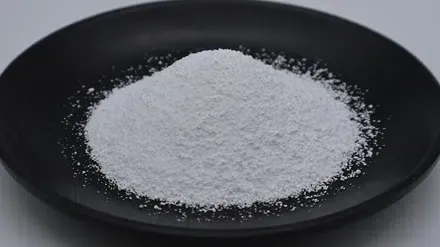
Mannitol is a white crystalline solid composed mainly of D‑mannitol with a small amount of sorbitol. It is odorless and possesses a sweet taste. It dissolves readily in water, is very slightly soluble in alcohol, and is nearly insoluble in most other common organic solvents. Commercially, mannitol is produced via the catalytic reduction of glucose. It exists naturally in small quantities in numerous foods, including olives, beets, and celery, as well as in the exudate of some tree species.
Mannitol refers to D‑mannitol. It is a hexahydric alcohol related to mannose and is an isomer of sorbitol. D‑Mannitol is widely distributed in plants and plant exudates; it can be isolated from manna and seaweeds. It appears as a white, odorless crystalline powder or free‑flowing granules. It offers a sweet flavor, roughly equivalent to glucose and about half as sweet as sucrose, and creates a cooling sensation in the oral cavity. When crystallized from alcohol, it forms orthorhombic needles under microscopic observation. Mannitol exhibits polymorphism.
D‑mannitol is the D‑enantiomer of mannitol. It serves multiple roles: an osmotic diuretic, a sweetening agent, an antiglaucoma drug, a metabolite, an allergen, a hapten, a food bulking agent, a food anticaking agent, a food humectant, a food stabilizer, a food thickening agent, an Escherichia coli metabolite, and a member of compatible osmolytes.
Parameters
| Property | Value |
| Melting point | 167-170 °C(lit.) |
| Boiling point | 295°C |
| alpha | 141 º (c= USP-directives) |
| density | 1.52 |
| bulk density | 400-500kg/m3 |
| refractive index | 1.3330 (estimate) |
| Fp | 290-295°C/3.5mm |
| storage temp. | 2-8°C |
| solubility | H2O: 1 M at 20 °C, clear, colorless |
| form | Crystalline Powder |
| pka | 13.5(at 18℃) |
| color | White |
| PH | 5.0-6.5 (25℃, 1M in H2O) |
| Odor | at 100.00 %. odorless |
| Odor Type | odorless |
| biological source | plant |
| Optical Rotation | [α]25/D +23.3 to +24.3°(lit.) |
| Water Solubility | soluble |
| λmax | λ: 260 nm Amax: 0.04 λ: 280 nm Amax: 0.04 |
| Merck | 14,5745 |
| BRN | 1721898 |
| Stability: | Stable. Combustible. Incompatible with strong oxidizing agents. |
| Cosmetics Ingredients Functions | MOISTURISING FRAGRANCE SKIN CONDITIONING BINDING HUMECTANT |
| InChIKey | FBPFZTCFMRRESA-KVTDHHQDSA-N |
| LogP | -3.262 (est) |
| CAS DataBase Reference | 69-65-8(CAS DataBase Reference) |
| NIST Chemistry Reference | D-Mannitol(69-65-8) |
| EPA Substance Registry System | D-Mannitol (69-65-8) |
Safety Information
| Item | Value |
| Hazard Codes | Xi |
| Risk Statements | 36/37/38 |
| Safety Statements | 24/25-36-26 |
| WGK Germany | 2 |
| RTECS | OP2060000 |
| F | 3 |
| Autoignition Temperature | 410 °C |
| TSCA | TSCA listed |
| HS Code | 29054300 |
| Hazardous Substances Data | 69-65-8(Hazardous Substances Data) |
| Toxicity | LD50 orally in Rabbit: 13500 mg/kg |
Product Application
Mannitol finds broad application in pharmaceutical formulations and food products. In pharmaceutical preparations, it is mainly used as a diluent (10–90% w/w) in tablet formulations. It is especially valuable because it is non‑hygroscopic and can therefore be used with moisture‑sensitive active ingredients.
Mannitol is suitable for direct‑compression tablet manufacturing (granular and spray‑dried grades are available) or for wet granulation processes. Granules containing mannitol offer the benefit of easy drying. Specific tablet uses include antacid products, glyceryl trinitrate tablets, and vitamin formulations.
It is frequently used as an excipient in chewable tablets due to its negative heat of solution, sweet taste, and pleasant mouthfeel. In lyophilized (freeze‑dried) preparations, mannitol (20–90% w/w) is included as a carrier to form a firm, uniform cake that enhances the visual quality of the lyophilized plug in vials; a pyrogen‑free grade is available for this purpose.
Mannitol has also been applied to prevent thickening in aqueous antacid suspensions of aluminum hydroxide (<7% w/v). It has been proposed as a plasticizer in soft‑gelatin capsules, as an ingredient in sustained‑release tablet formulas, and as a carrier in dry powder inhalers. It also acts as a diluent in fast‑disintegrating oral dosage forms.
In food applications, mannitol serves as a bulking agent. Therapeutically, parenterally administered mannitol acts as an osmotic diuretic, a diagnostic agent for renal function, an adjunct in treating acute renal failure, and an agent to lower intracranial pressure, manage cerebral edema, and reduce intraocular pressure. When administered orally, mannitol is poorly absorbed from the gastrointestinal tract; however, high doses may lead to osmotic diarrhea.
Fast delivery time
Inventory 2-3 working days New production 7-10 working days.


