

Product Details
Daidzein CAS#486-66-8
Physical & Spectral Characteristics
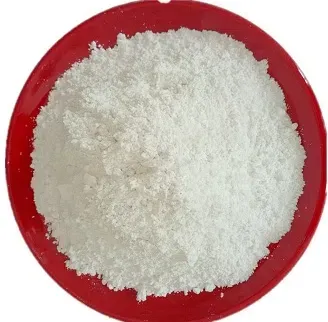
This product presents as white fine powder under normal temperature and pressure. It shows characteristic spectral properties:
- UV Maximum Absorption: 250 nm
- Log ε: 4.44
- Solubility: Slightly soluble in water, freely soluble in ethanol, methanol, dimethyl sulfoxide (DMSO) and other common organic solvents; practically insoluble in non-polar solvents.
Natural Source & Botanical Background
Daidzein is a typical bioactive ingredient naturally extracted from leguminous plants, mainly including soybeans, red clover and the roots of Pueraria lobata (kudzu vine).
The medicinal value of related legume herbs was first recorded in Shen Nong Ben Cao Jing, a classic ancient Chinese herbal work dating back to 2838 BC. As one of the core soy isoflavones, daidzein is the major active constituent of dried pueraria root, a traditional Chinese medicinal herb which is widely applied for clearing internal heat, promoting fluid production and relieving diarrhea.
Pueraria root contains a rich mixture of natural compounds, including puerarin xyloside, general soy flavonoids, soybean flavonoid glycosides, beta-sitosterol, daidzin and daidzein. Among all these components, puerarin and daidzein are recognized as the primary functional ingredients.
Daidzein Chemical Properties
| Melting point | 315-323°C (dec.) |
| Boiling point | 317.45°C (rough estimate) |
| density | 1.1629 (rough estimate) |
| refractive index | 1.4300 (estimate) |
| storage temp. | 2-8°C |
| solubility | DMSO 10 mg/mL |
| pka | 7.01±0.20(Predicted) |
| form | Powder |
| color | White to off-white |
| biological source | synthetic |
| Water Solubility | insoluble |
| Merck | 14,2801 |
| BRN | 231523 |
| Major Application | food and beverages |
| Cosmetics Ingredients Functions | SKIN CONDITIONING MISCELLANEOUS |
| InChI | 1S/C15H10O4/c16-10-3-1-9(2-4-10)13-8-19-14-7-11(17)5-6-12(14)15(13)18/h1-8,16-17H |
| InChIKey | ZQSIJRDFPHDXIC-UHFFFAOYSA-N |
| SMILES | Oc1ccc(cc1)C2=COc3cc(O)ccc3C2=O |
| LogP | 2.632 (est) |
| CAS DataBase Reference | 486-66-8(CAS DataBase Reference) |
| EPA Substance Registry System | 4H-1-Benzopyran-4-one 7-hydroxy-3-(4-hydroxyphenyl)- (486-66-8) |
Safety Information
| Hazard Codes | Xi |
| Risk Statements | 36/38 |
| Safety Statements | 24-26-37/39 |
| WGK Germany | 3 |
| RTECS | DJ3100040 |
| HazardClass | IRRITANT |
| HS Code | 29329990 |
| Storage Class | 11 Combustible Solids |
| Hazard Classifications | Eye Irrit. 2 Skin Irrit. 2 |
Product Application of Daidzein CAS#486-66-8
Chemical Classification
Chemically, daidzein is categorized as an isoflavone compound. Along with other homologous substances such as genistein, it widely exists in a variety of plants and herbal materials. Collectively, isoflavone components isolated from soybeans are defined as soy isoflavones. Daidzein acts as an inactive analog of Genistein (Cat #G3500000) in related research and application.
Biological Activities & Functional Mechanisms
Daidzein possesses distinct biological activities with clear action mechanisms verified by relevant studies:
- It is capable of suppressing the activity of casein kinase II, thereby blocking the G1 phase of the cell cycle in Swiss 3T3 cells.
- It can effectively inhibit the physiological effect of GABA on recombinant GABAA receptors.
Fast delivery time
Inventory 2-3 working days New production 7-10 working days


