

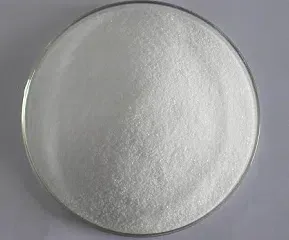
Rotenone CAS#83-79-4
The main natural source of rotenone is the tuber root of Derris elliptica. It can also be isolated from the root systems of Derris mallaccensis, Lonchocarpus utilis, and Lonchocarpus uruca. Rotenone acts as both a stomach poison and a contact poison against arthropods. Its rapid knockdown effect arises from reducing the availability of nicotinamide adenine dinucleotide, a critical cofactor in multiple biochemical pathways including the Krebs cycle, which ultimately suppresses mitochondrial respiratory enzyme activity.

Rotenone Chemical Properties
| Property | Value |
| Melting point | 159-164 °C (lit.) |
| alpha | -115 º (C=1.4 IN CHLOROFORM) |
| Boiling point | 210-220 °C/0.5 mmHg (lit.) |
| density | 1.1917 (rough estimate) |
| refractive index | 1.4593 (estimate) |
| storage temp. | Keep in dark place,Inert atmosphere,Room temperature |
| solubility | insoluble in EtOH; insoluble in H2O; ≥77.6 mg/mL in DMSO |
| Water Solubility | 15 mg l-1 (100 °C) |
| form | White to off-white solid |
| color | White to Light yellow to Light orange |
| Merck | 14,8271 |
| BRN | 6773081 |
| Stability: | Stable, but light and air sensitive. Combustible. Incompatible with oxidizing agents, especially in the presence of alkalies. |
| InChI | 1S/C23H22O6/c1-11(2)16-8-14-15(28-16)6-5-12-22(24)21-13-7-18(25-3)19(26-4)9-17(13)27-10-20(21)29-23(12)14/h5-7,9,16,20-21H,1,8,10H2,2-4H3/t16-,20-,21+/m1/s1 |
| InChIKey | JUVIOZPCNVVQFO-HBGVWJBISA-N |
| SMILES | COc1cc2OCC3Oc4c5C[C@@H](Oc5ccc4C(=O)C3c2cc1OC)C(C)=C |
| NIST Chemistry Reference | Rotenone(83-79-4) |
| EPA Substance Registry System | Rotenone (83-79-4) |
Safety Information
| Item | Details |
| Hazard Codes | T,N |
| Risk Statements | 25-36/37/38-50/53 |
| Safety Statements | 22-24/25-36-45-60-61 |
| OEB | B |
| OEL | TWA: 5 mg/m3 |
| RIDADR | UN 2811 6.1/PG 3 |
| WGK Germany | 3 |
| RTECS | DJ2800000 |
| HazardClass | 6.1(b) |
| PackingGroup | III |
| HS Code | 29329990 |
| Storage Class | 6.1A - Combustible acute toxic Cat. 1 and 2 very toxic hazardous materials |
| Hazard Classifications | Acute Tox. 1 Inhalation; Acute Tox. 2 Oral; Aquatic Acute 1; Aquatic Chronic 1; Eye Irrit. 2; Skin Irrit. 2; STOT SE 3 |
| Hazardous Substances Data | 83-79-4(Hazardous Substances Data) |
| Toxicity | LD50 i.p. in mice: 2.8 mg/kg (Fukami); in rats (mg/kg): 132 orally; 6 i.v. (Soloway) |
| IDLA | 2,500 mg/m3 |
Product Application of Rotenone CAS#83-79-4
Rotenone is a naturally occurring broad‑spectrum insecticide found in the seeds and stems of various plant species. It was first registered in 1947, and today its only approved use in the United States is as a piscicide (U.S. EPA, 2007). In 2006, registrants voluntarily withdrew all other applications, including agricultural, residential, pet, and livestock uses, retaining only fishery‑related applications.
Current primary uses involve fisheries management: eradicating non‑native fish from lakes, ponds, and streams, and cleaning ponds of unwanted fish before stocking catfish fry (U.S. EPA, 2006d).
Indigenous communities have traditionally used rotenone to stun fish for easy capture. Outside the U.S., it continues to be used for insect control in fruit and vegetable farming, as well as for managing fire ants and mosquito larvae in aquatic environments (HSDB, 2012a).
Fast delivery time
Inventory 2-3 working days New production 7-10 working days


