

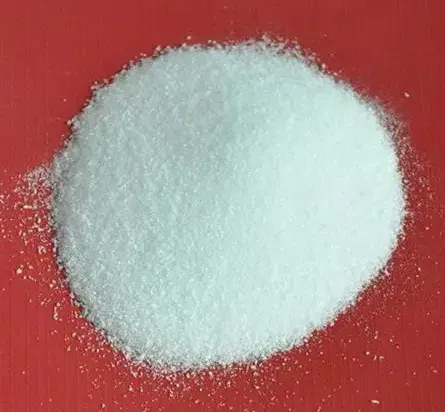
Products Description
Molecular Structural Formula: CH₂CH₂CH₂CH₂CH₂NHCO (cyclic amide ring structure)
Solubility Characteristic: Possesses outstanding water solubility; a 70% caprolactam aqueous solution has a specific gravity of 1.05, heavier than pure water. Besides water, it can be fully dissolved in mainstream organic solvents including ethanol, methanol, benzene, acetone and chloroform.
Phase & Logistics Feature: Two usable forms for industrial processing and transportation. It exists as solid crystal under normal ambient temperature; after moderate heating, it turns into low-viscosity molten liquid, supporting continuous molten-state transportation and polymerization processing.
Core Thermal & Physical Constant Indexes:
- Melting Point Range: 68 ℃ ~ 70 ℃
- Boiling Point: Approximately 268.5 ℃ under standard atmospheric pressure
- Vapor Pressure: <0.01 mmHg at 20°C, low volatility for safer workshop operation
- Relative Density (Solid at 70°C): 1.023
Autoignition Temperature: 395 °C
Storage Stability Note: Stable under sealed, cool and dry storage conditions. Strictly avoid contact with strong oxidants, strong acids and strong alkalis to prevent discoloration and chemical side reactions; keep packaging tightly sealed due to its hygroscopic property.
Chemical Properties
| Item | Value |
| Melting point | 68-71 °C(lit.) |
| Boiling point | 136-138 °C at 10 mm Hg(lit.) |
| bulk density | 500-550 kg/m3 |
| density | 1.01 |
| vapor pressure | <0.01 mm Hg ( 20 °C) |
| refractive index | 1.4935 |
| FEMA | 4235 1,6-HEXALACTAM |
| Fp | 152 °C |
| storage temp. | Store below +30°C. |
| solubility | H2O 0.1 g/mL clear colorless |
| pka | 16.61±0.20(Predicted) |
| form | Crystals or Flakes |
| Specific Gravity | 1.042 (20/4℃) |
| color | White |
| PH | 7.0-8.5 (333g/l H2O 20℃) |
| Odor | amine spicy |
| Odor Type | spicy |
| explosive limit | 1.4-8%(V) |
| Water Solubility | 4560 g/L (20 ºC) |
| Merck | 14,1761 |
| JECFA Number | 1594 |
| BRN | 106934 |
| Exposure limits | ACGIH TWA 5 mg/m3 NIOSH TWA 1 mg/m3 TWA 0.22 ppm STEL 3 mg/m3 STEL 0.66 ppm |
| Dielectric constant | 1.7 - 1.9 at 0.0℃ |
| LogP | 0.12 at 25℃ |
| CAS DataBase Reference | 105-60-2(CAS DataBase Reference) |
| NIST Chemistry Reference | Caprolactam(105-60-2) |
| IARC | 3 (Vol. 39 Sup 7 71) 1999 |
| EPA Substance Registry System | Caprolactam (105-60-2) |
Safety Information
| Item | Value |
| Hazard Codes | Xn |
| Risk Statements | 20/22-36/37/38 |
| Safety Statements | 2-24/25 |
| OEB | C |
| OEL | TWA 1 mg/m3 STEL 3 mg/m3 |
| RIDADR | UN 2811 6.1/PG 2 |
| WGK Germany | 1 |
| RTECS | CM3675000 |
| Autoignition Temperature | 707 °F |
| TSCA | Yes |
| HS Code | 29337100 |
| Hazardous Substances Data | 105-60-2(Hazardous Substances Data) |
| Toxicity | LD50 orally in rats 2.14 g/kg (Smyth) |
Product Application
Safety Profile & Core Industrial Application Fields (Sorted & Deduplicated)
Safety Profile & Occupational Exposure Control
This chemical will cause obvious irritation to human eyes, nose, throat and skin once its vapor or solid dust is inhaled or contacted by the human body; it is also harmful if swallowed or absorbed through skin.
Authorized occupational threshold limit values for standard factory production environments:
- Airborne caprolactam vapor: 5 ppm time-weighted average limit
Caprolactam solid dust: 1 mg/m³ permissible exposure limit
Operation Reminders: Operators must wear dust-proof respirators, chemical-resistant gloves and protective goggles during loading, unloading and sampling. Production workshops shall maintain continuous ventilation.
Core Application Fields
ε-Caprolactam acts as the irreplaceable monomer raw material for synthesizing polycaprolactam, which is widely known as Nylon-6, with mature downstream applications covering three major industrial sectors:
Synthetic Fiber Industry
Undergoes ring-opening polymerization to produce Nylon-6 textile fibers, extensively applied in garment woven fabrics, household carpet raw materials, automotive tire cord fabrics, industrial filter cloths and high-strength sewing threads.
Engineering Plastic & Packaging Film Industry
Used to manufacture high-toughness engineering plastic components such as gears, bearings, electrical insulating parts and medical plastic accessories; also processed into transparent, wear-resistant plastic packaging films for food, electronic products and daily consumer goods.
- Fine Chemical Manufacturing Sector
- High-efficiency dedicated solvent for high-molecular polymer synthesis;
- Core raw material for producing industrial anti-corrosion coatings and general plasticizers;
- Functional cross-linking additive for polyurethane resin formulation to enhance product toughness and adhesive performance.
Supply & Delivery
Fast delivery time
Inventory: 2-3 working days
New production: 7-10 working days
FAQ
FAQ 1: Can I obtain test samples and official certification documents of ε-Caprolactam before bulk order?
Yes. As an integrated manufacturer and chemical trader operated via hlhschem.com, we provide small free test samples of ε-Caprolactam for all overseas clients (buyers only bear international courier fees). Along with samples, we can supply complete official documents including Certificate of Analysis (COA), Material Safety Data Sheet (MSDS), export customs declaration materials and ISO factory qualification certificates to support your laboratory inspection and customs clearance.
FAQ 2: What delivery and supply advantages do you have for bulk caprolactam orders?
We support two delivery forms according to customer production demands: solid flake/granule packed in 25kg bags, and heated molten liquid transported by insulated tank containers. Our MOQ is set as 1 full container load, with large self-owned factory stock to guarantee fast shipment without intermediate links. Our integrated production & trading model cuts extra circulation costs, and our professional import & export team offers full-process logistics and customs service for global customers.


