

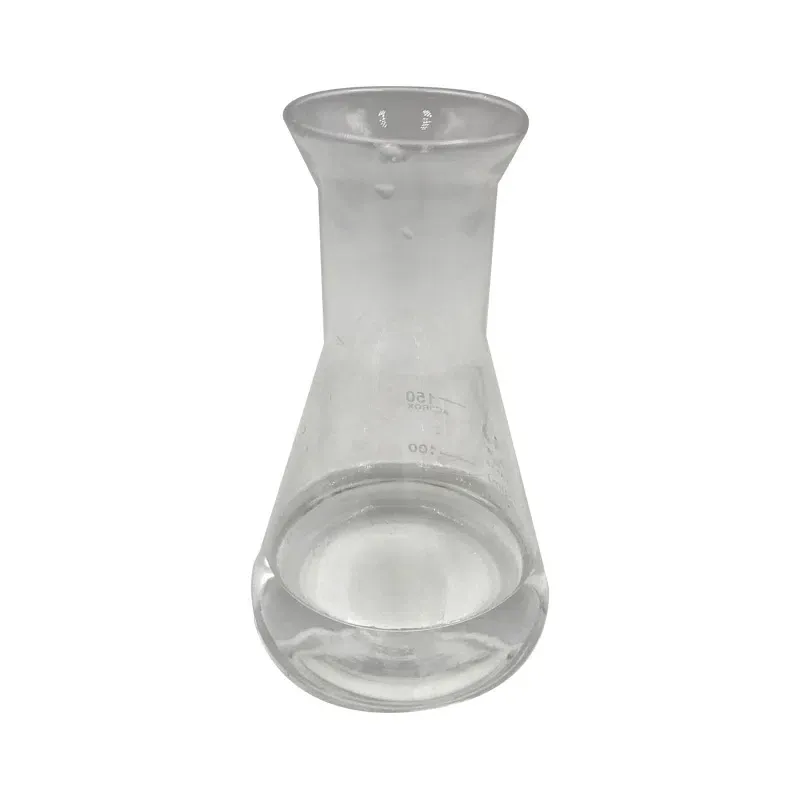
Product Details
Acetic acid, also referred to as AcOH, is a principal organic acid best known as the key component of vinegar. It occurs widely in nature either in free state or as ester derivatives across various plant sources. Its molecular formula is CH3COOH. Vinegar production and utilization date back thousands of years, with documented history in ancient civilizations. Concentrated acetic acid was first successfully prepared by Stahl in 1700. Anhydrous acetic acid appears as a colorless liquid featuring a sharp, penetrating odor. It has a melting point of 16.6°C, boiling point of 117.9°C, and relative density of 1.049 (20/4°C). It is fully miscible with water, ethanol, glycerol, diethyl ether, and carbon tetrachloride, while insoluble in carbon disulfide. At low temperatures, anhydrous acetic acid solidifies into an ice-like crystalline form, commonly called glacial acetic acid. It exhibits corrosive properties and acts as a weak organic acid with typical acidic characteristics, capable of undergoing esterification reactions with alcohols.
Parameters
| Parameter | Value |
| Melting point | 16.2 °C(lit.) |
| Boiling point | 117-118 °C(lit.) |
| density | 1.049 g/mL at 25 °C(lit.) |
| vapor density | 2.07 (vs air) |
| vapor pressure | 11.4 mm Hg (20 °C) |
| FEMA | 2006 | ACETIC ACID |
| refractive index | n20/D 1.371(lit.) |
| Fp | 104 °F |
| storage temp. | Store below +30°C. |
| solubility | alcohol: miscible(lit.) |
| form | Solution |
| pka | 4.74(at 25℃) |
| Specific Gravity | 1.0492 (20℃) |
| color | colorless |
| Odor | Strong, pungent, vinegar-like odor detectable at 0.2 to 1.0 ppm |
| PH | 3.91(1 mM solution);3.39(10 mM solution);2.88(100 mM solution); |
| PH Range | 2.4 (1.0M solution) |
| Odor Threshold | 0.006ppm |
| Odor Type | acidic |
| explosive limit | 4-19.9%(V) |
| biological source | synthetic |
| Water Solubility | miscible |
| λmax | λ: 260 nm Amax: 0.05 λ: 270 nm Amax: 0.02 λ: 300 nm Amax: 0.01 λ: 500 nm Amax: 0.01 |
| Merck | 14,55 |
| JECFA Number | 81 |
| BRN | 506007 |
| Henry's Law Constant | 133, 122, 6.88, and 1.27 at pH values of 2.13, 3.52, 5.68, and 7.14, respectively (25 °C, Hakuta et al., 1977) |
| Exposure limits | TLV-TWA 10 ppm ~25 mg/m3) (ACGIH, OSHA, and MSHA); TLV-STEL 15 ppm (37.5 mg/m3) (ACGIH). |
| Dielectric constant | 4.1(2℃) |
| Stability: | Volatile |
| LogP | -0.170 |
| Surface tension | 26.10mN/m at 298.15K |
| CAS DataBase Reference | 64-19-7(CAS DataBase Reference) |
| NIST Chemistry Reference | Acetic acid(64-19-7) |
| EPA Substance Registry System | Acetic acid (64-19-7) |
Safety Information
| Item | Details |
| Hazard Codes | C,Xi |
| Risk Statements | 34-42-35-10-36/38 |
| Safety Statements | 26-36/37/39-45-23-24/25 |
| RIDADR | UN 1792 8/PG 2 |
| OEB | A |
| OEL | TWA: 10 ppm (25 mg/m3), STEL: 15 ppm (37 mg/m3) |
| WGK Germany | 3 |
| RTECS | NN1650000 |
| F | 1-8-10 |
| Autoignition Temperature | 426 °C |
| TSCA | Yes |
| HazardClass | 8 |
| PackingGroup | II |
| HS Code | 29152100 |
| Hazardous Substances Data | 64-19-7(Hazardous Substances Data) |
| Toxicity | LD50 in rats (g/kg): 3.53 orally (Smyth) |
| IDLA | 50 ppm |
Product Application of Acetic acid CAS#64-19-7
Acetic Acid (CAS#64-19-7) is a corrosive natural organic acid widely employed in chemical manufacturing as a raw material for synthesizing products like vinyl acetate, leveraging its acidity, solubility, and chemical reactivity. In the medical and healthcare sector, it serves for disinfection, sterilization, pharmaceutical synthesis, and clinical diagnostic applications. Regarding energy and environmental protection, it supports biofuel production and wastewater denitrification processes. It is also widely used in laboratories as a buffer solution and standard analytical reagent, covering a broad spectrum of industrial and scientific applications.


