

Products Description of Styrene CAS #100-42-5
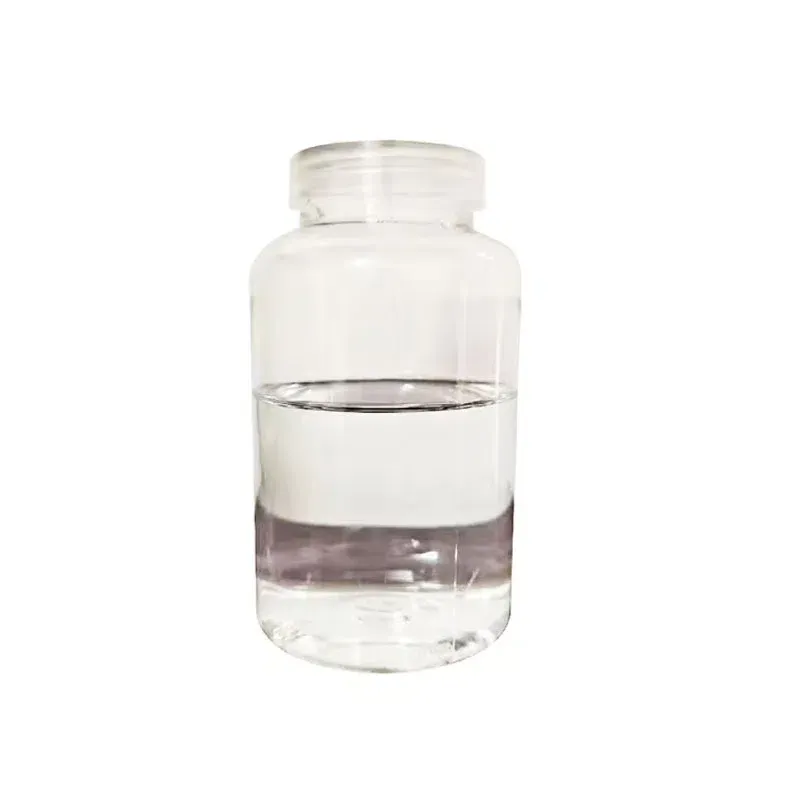
Styrene is an aromatic organic compound where one hydrogen of ethylene is substituted with a benzene ring. The vinyl group’s electrons form a conjugated system with the benzene ring. It has the molecular formula C8H8 and structural formula C6H5CH=CH2. Naturally present in storax, it appears as a colorless oily liquid with a distinctive odor. Key physical properties include a melting point of −30.6 °C, boiling point of 145.2 °C, relative density 0.9060 (20/4 °C), refractive index 1.5469, and viscosity 0.762 cP at 68 °F. It is insoluble in water but dissolves in ethanol and diethyl ether. When exposed to air, it slowly polymerizes and oxidizes. To enable safe storage, inhibitors such as hydroquinone or tert‑butyl catechol (0.0002%–0.002%) must be added to slow polymerization. Industrially, it is a critical monomer for manufacturing synthetic resins, ion‑exchange resins, and synthetic rubber. It also undergoes the typical addition reactions of alkenes.
Parameters
| Parameter | Value |
| Melting point | -31 °C (lit.) |
| Boiling point | 145-146 °C (lit.) |
| density | 0.906 g/mL at 25 °C |
| vapor density | 3.6 (vs air) |
| vapor pressure | 12.4 mm Hg ( 37.7 °C) |
| refractive index | n 20/D 1.546(lit.) |
| Fp | 88 °F |
| storage temp. | Store at <= 20°C. |
| solubility | 0.24g/l |
| form | Liquid |
| pka | >14 (Schwarzenbach et al., 1993) |
| Specific Gravity | 0.909 |
| color | Colorless |
| Odor | at 0.10 % in triacetin. sweet balsam floral plastic |
| Odor Type | balsamic |
| biological source | synthetic |
| Odor Threshold | 0.035ppm |
| explosive limit | 1.1-8.9%(V) |
| Water Solubility | 0.3 g/L (20 ºC) |
| FreezingPoint | -30.6℃ |
| Sensitive | Air Sensitive |
| Merck | 14,8860 |
| BRN | 1071236 |
| Henry's Law Constant | (x 10^-3 atm·m³/mol): 3.91 at 25 °C (static headspace-GC, Welke et al., 1998) |
| Exposure limits | TLV-TWA 50 ppm (~212 mg/m³) (ACGIH and NIOSH), 100 ppm (~425 mg/m³) (OSHA and MSHA); ceiling 200 ppm, peak 600 ppm/5 min/3 h (OSHA); STEL 100 ppm (~425 mg/m³) (ACGIH). |
| Dielectric constant | 2.4300000000000002 |
| Dielectric constant | 2.4(25℃) |
| Stability: | Stable, but may polymerize upon exposure to light. Normally shipped with a dissolved inhibitor. Substances to be avoided include strong acids, aluminium chloride, strong oxidizing agents, copper, copper alloys, metallic salts, polymerization catalysts and accelerators. Flammable - vapour may travel considerable distance to ignition source |
| InChIKey | PPBRXRYQALVLMV-UHFFFAOYSA-N |
| LogP | 2.96 at 25℃ |
| CAS DataBase Reference | 100-42-5(CAS DataBase Reference) |
| NIST Chemistry Reference | Styrene(100-42-5) |
| IARC | 2A (Vol. 60, 82, 121) 2019 |
| EPA Substance Registry System | Styrene (100-42-5) |
Safety Information
| Item | Details |
| Hazard Codes | Xn,T,F |
| Risk Statements | 10-20-36/38-40-36/37/38-39/23/24/25-23/24/25-11-48/20-63 |
| Safety Statements | 23-36-26-16-45-36/37-7-46 |
| RIDADR | UN 2055 3/PG 3 |
| OEB | A |
| OEL | TWA: 50 ppm (215 mg/m3), STEL: 100 ppm (425 mg/m3) |
| WGK Germany | 2 |
| RTECS | WL3675000 |
| Autoignition Temperature | 914 °F |
| TSCA | Yes |
| HS Code | 2902 50 00 |
| HazardClass | 3 |
| PackingGroup | III |
| Hazardous Substances Data | 100-42-5(Hazardous Substances Data) |
| Toxicity | LD50 in mice (mg/kg): 660 ± 44.3 i.p.; 90 ± 5.2 i.v. |
| IDLA | 700 ppm |
Product Application of Styrene CAS #100-42-5
It serves as a primary feedstock for producing polystyrene, synthetic rubber, engineering plastics, ion-exchange resins, and related materials.
Fast delivery time
Inventory 2-3 working days New production 7-10 working days


