

Products Description
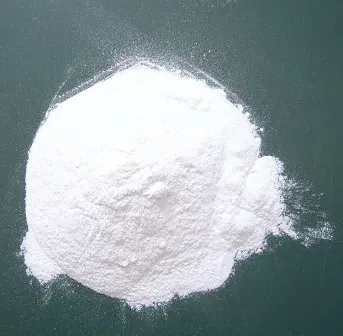
It appears as a white, odorless crystalline powder with a mildly sweet taste. Aqueous solutions show acidic reaction to litmus. Approximately 1 gram dissolves in 4 mL of water, while solubility in ethanol and ether is very low. Glycine can be synthesized through multiple routes: from chloroacetic acid and ammonia; from protein materials including gelatin and silk fibroin; from ammonium bicarbonate and sodium cyanide; via catalytic decomposition of serine; or from hydrobromic acid and methyleneaminoacetonitrile.
Chemical Properties
| Melting point | 240 °C (dec.) (lit.) |
| Boiling point | 233°C |
| density | 1.595 |
| bulk density | 920kg/m3 |
| vapor pressure | 0.0000171 Pa (25 °C) |
| FEMA | 3287 | GLYCINE |
| refractive index | 1.4264 (estimate) |
| Fp | 176.67°C |
| storage temp. | 2-8°C |
| solubility | H2O: 100 mg/mL |
| form | powder |
| pka | 2.35(at 25℃) |
| color | <5 (200 mg/mL)(APHA) |
| PH | 4(0.2 molar aqueous solution) |
| Odor | Odorless |
| PH Range | 4 |
| Odor Type | odorless |
| biological source | synthetic |
| Water Solubility | 25 g/100 mL (25 ºC) |
| λmax | λ: 260 nm Amax: 0.05 λ: 280 nm Amax: 0.05 |
| JECFA Number | 1421 |
| Merck | 14,4491 |
| BRN | 635782 |
| Stability | Stable. Combustible. Incompatible with strong oxidizing agents. |
| Cosmetics Ingredients Functions | ANTISTATIC BUFFERING SKIN CONDITIONING HAIR CONDITIONING |
| InChIKey | DHMQDGOQFOQNFH-UHFFFAOYSA-N |
| LogP | -3.21 |
| CAS DataBase Reference | 56-40-6(CAS DataBase Reference) |
| NIST Chemistry Reference | Glycine(56-40-6) |
| EPA Substance Registry System | Glycine (56-40-6) |
| Absorption | ≤0.15 at 280 at 1M |
| CAS Number Unlabeled | 73-32-5 |
Safety Information
| Risk Statements | 33 |
| Safety Statements | 22-24/25 |
| WGK Germany | 2 |
| RTECS | MB7600000 |
| TSCA | TSCA listed |
| HS Code | 29224910 |
| Hazardous Substances Data | 56-40-6(Hazardous Substances Data) |
| Toxicity | LD50 orally in Rabbit: 7930 mg/kg |
Product Application
Glycine is a non‑essential amino acid widely used as a nutritional ingredient and dietary supplement. It dissolves readily in water (about 1 g per 4 mL) and is a major component in collagen. It is often used to reduce the bitter aftertaste of saccharin in artificially sweetened beverages and helps prevent fats from turning rancid.
In cosmetics, glycine serves as a texturizing agent. It accounts for roughly 30% of the collagen structure.
Supply & Delivery
Fast delivery time
Inventory 2-3 working days
New production 7-10 working days


