

Product Details
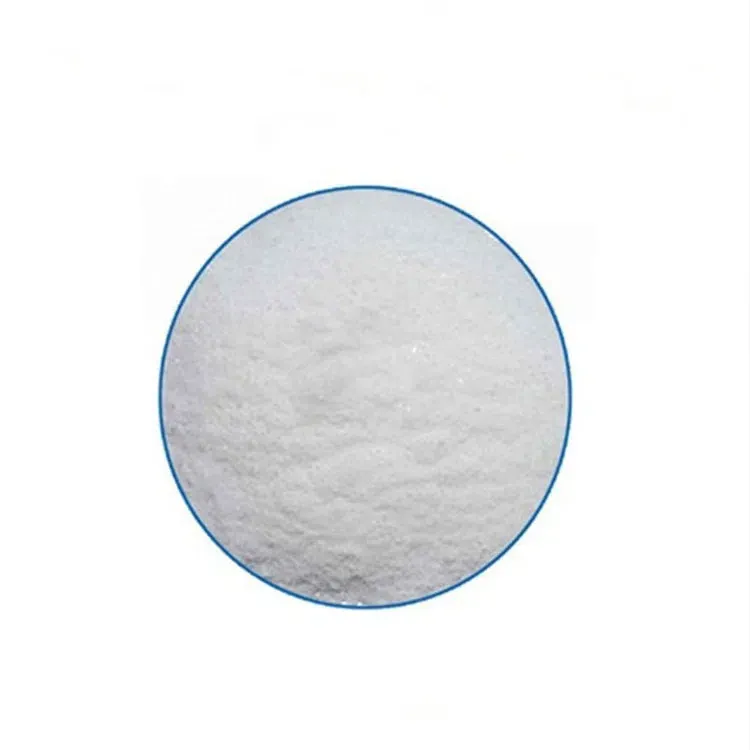
Naphthalene presents as white solid substance with high volatility, and it emits a distinctive pungent odor. Its volatile composition can be detected faintly in ambient air and aqueous environment. Also termed white tar and tar camphor, this compound is commonly processed into mothballs and insect repellent flakes for daily insect prevention. It naturally exists as an inherent component within petroleum and coal resources.
Naphthalene Chemical Properties
| Property | Value |
| Melting point | 80-82 °C (lit.) |
| Boiling point | 218 °C (lit.) |
| bulk density | 550-600mg/m3 |
| density | 0.99 |
| vapor density | 4.4 (vs air) |
| vapor pressure | 0.03 mm Hg (25 °C) |
| refractive index | 1.5821 |
| Fp | 174 °F |
| storage temp. | Store below +30°C. |
| solubility | methanol: soluble 50mg/mL, clear, colorless |
| form | Faint beige to brown to salmon red powder |
| color | White to almost white |
| Specific Gravity | 1.145 |
| Odor | at 10.00 % in benzyl benzoate. pungent dry tarry |
| Odor Type | pungent |
| explosive limit | 0.9-5.9%(V) |
| Water Solubility | 30 mg/L (25 ºC) |
| Merck | 14,6370 |
| BRN | 1421311 |
| Henry's Law Constant | 5.64 at 25 °C |
| Exposure limits | TLV-TWA 10 ppm (~50 mg/m3); STEL 15 ppm (~75 mg/m3); IDLH 500 ppm |
| Dielectric constant | 2.5(85℃) |
| InChI | 1S/C10H8/c1-2-6-10-8-4-3-7-9(10)5-1/h1-8H |
| InChIKey | UFWIBTONFRDIAS-UHFFFAOYSA-N |
| SMILES | c1ccc2ccccc2c1 |
| LogP | 3.7 at 25℃ |
| CAS DataBase Reference | 91-20-3(CAS DataBase Reference) |
| NIST Chemistry Reference | Naphthalene(91-20-3) |
| IARC | 2B (Vol. 82) 2002 |
| EPA Substance Registry System | Naphthalene (91-20-3) |
Safety Information
| Item | Details |
| Hazard Codes | Xn,N,F,T |
| Risk Statements | 22-40-50/53-67-65-38-11-39/23/24/25-23/24/25-52/53-20 |
| Safety Statements | 36/37-46-60-61-62-45-16-7-33-25-9 |
| RIDADR | UN 1334 4.1/PG 3 |
| OEB | A |
| OEL | TWA: 10 ppm (50 mg/m3), STEL: 15 ppm (75 mg/m3) |
| WGK Germany | 3 |
| RTECS | QJ0525000 |
| Autoignition Temperature | 978 °F |
| TSCA | TSCA listed |
| HazardClass | 4.1 |
| PackingGroup | III |
| HS Code | 29029010 |
| Storage Class | 4.1B - Flammable solid hazardous materials |
| Hazard Classifications | Acute Tox. 4 Oral; Aquatic Acute 1; Aquatic Chronic 1; Carc. 2; Flam. Sol. 2 |
| Hazardous Substances Data | 91-20-3(Hazardous Substances Data) |
| Toxicity | Acute oral LD50 for guinea pigs 1,200 mg/kg, mice 533 mg/kg, rats 1,250 mg/kg |
| IDLA | 250 ppm |
Product Application Of Naphthalene CAS#91-20-3
Chemical Properties & Industrial Utilization
Apart from typical oxidation and reduction reactions, naphthalene is prone to diverse substitution reactions, covering nitration, halogenation, sulfonation and acylation. A variety of functional derivatives can be produced through these chemical conversions.
Such derivatives serve as crucial raw materials for the fabrication of dyes, pesticides, organic solvents and synthetic resins. In industrial production, naphthalene is predominantly adopted to synthesize phthalic anhydride with the molecular formula C₈H₄O₃.
Supply & Delivery
Fast delivery time
Inventory: 2-3 working days
New production: 7-10 working days


