

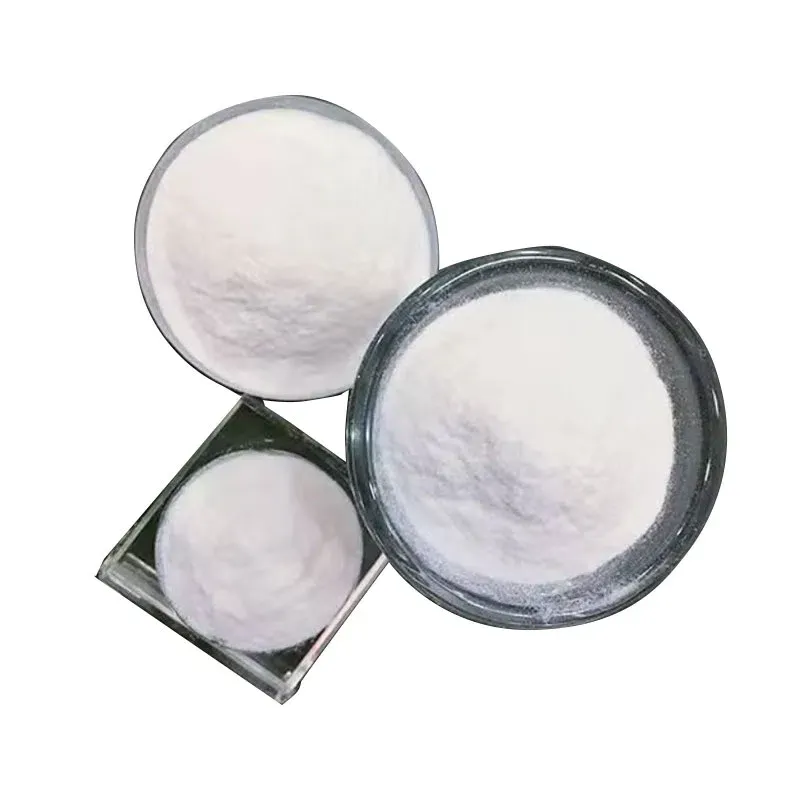
Products Description of Naphthalene CAS# 91-20-3
Naphthalene is the simplest fused aromatic hydrocarbon made up of two benzene rings, often called mothballs. It ranks among the primary products from coal tar processing. Industrially, naphthalene exists as crude naphthalene (industrial naphthalene and pressed naphthalene) and refined naphthalene. Its molecular formula is C10H8 with a molar mass of 128.17. Key physical properties include a melting point of 80.28°C, solid density of 1.145 g/cm³, liquid density (85°C) of 0.9752 g/cm³, specific heat capacity (100°C) of 1809 J/(kg·K), and refractive index (85°C) of 1.5898. Naphthalene forms colorless monoclinic crystals that are volatile and sublimable, with a distinctive odor. It is flammable and can form explosive mixtures with air. Its petroleum ether solution emits a reddish-purple fluorescence under a mercury lamp. It is nearly insoluble in water but dissolves in diethyl ether, ethanol, benzene, and other solvents. Inhalation or skin absorption of naphthalene vapor or dust may lead to poisoning; the permissible exposure limit in air is 20 mg/m³. Naphthalene serves as a fundamental raw material for dyes, plastics, coatings, pharmaceuticals, pesticides, and related industries. It was once widely used directly as mothballs for protecting clothing and furs.
Parameters
| Item | Value |
| Melting point | 80-82 °C (lit.) |
| Boiling point | 218 °C (lit.) |
| density | 0.99 |
| bulk density | 550-600mg/m3 |
| vapor density | 4.4 (vs air) |
| vapor pressure | 0.03 mm Hg ( 25 °C) |
| refractive index | 1.5821 |
| Fp | 174 °F |
| storage temp. | Store below +30°C. |
| solubility | methanol: soluble50mg/mL, clear, colorless |
| form | Faint beige to brown to salmon red powder |
| color | White to almost white |
| Specific Gravity | 1.145 |
| Odor | at 10.00 % in benzyl benzoate. pungent dry tarry |
| Odor Type | pungent |
| explosive limit | 0.9-5.9%(V) |
| Water Solubility | 30 mg/L (25 ºC) |
| Merck | 14,6370 |
| BRN | 142131 |
| Henry's Law Constant | 5.64 at 25 °C (thermodynamic method-GC/UV spectrophotometry, Altschuh et al., 1999) |
| Exposure limits | TLV-TWA 10 ppm (~50 mg/m^{3}) (ACGIH, MSHA, and OSHA); STEL 15 ppm (~75 mg/m^{3}) (ACGIH); IDLH 500 ppm. |
| Dielectric constant | 2.5(85℃) |
| InChIKey | UFWIBTONFRDIAS-UHFFFAOYSA-N |
| LogP | 3.7 at 25℃ |
| CAS DataBase Reference | 91-20-3(CAS DataBase Reference) |
| IARC | 2B (Vol. 82) 2002 |
| NIST Chemistry Reference | Naphthalene(91-20-3) |
| EPA Substance Registry System | Naphthalene (91-20-3) |
Safety Information
| Item | Value |
| Hazard Codes | Xn,N,F,T |
| Risk Statements | 22-40-50/53-67-65-38-11-39/23/24/25-23/24/25-52/53-20 |
| Safety Statements | 36/37-46-60-61-62-45-16-7-33-25-9 |
| RIDADR | UN 1334 4.1/PG 3 |
| OEB | A |
| OEL | TWA: 10 ppm (50 mg/m3), STEL: 15 ppm (75 mg/m3) |
| WGK Germany | 3 |
| RTECS | QJ0525000 |
| Autoignition Temperature | 978 °F |
| TSCA | Yes |
| HazardClass | 4.1 |
| PackingGroup | III |
| HS Code | 29029010 |
| Hazardous Substances Data | 91-20-3(Hazardous Substances Data) |
| Toxicity | Acute oral LD_{50} for guinea pigs 1,200 mg/kg, mice 533 mg/kg, rats 1,250 mg/kg (quoted, RTECS, 1985). |
| IDLA | 250 ppm |
Product Application of Naphthalene CAS# 91-20-3
It is mainly employed in manufacturing phthalic anhydride and also acts as a raw material for producing dyes, pharmaceuticals, and other chemical products.
Fast delivery time
Inventory 2-3 working days New production 7-10 working days


