

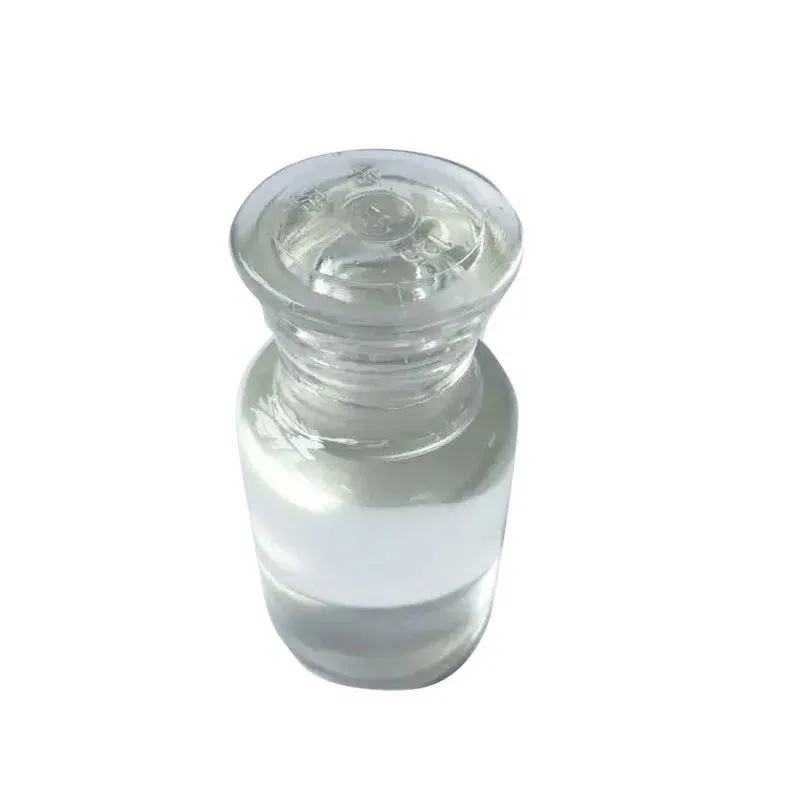
Products Description of Xylene CAS#1330-20-7
Xylene (dimethylbenzene) is a colorless, clear aromatic liquid formed when two hydrogen atoms on the benzene ring are substituted by methyl groups. It has a boiling point range of 137–140°C. Based on the positions of the two methyl substituents, xylene exists in three isomers: ortho‑xylene, meta‑xylene, and para‑xylene. In industrial applications, xylene usually refers to a mixture of these isomers plus ethylbenzene. Commercial grades typically meet premium and first‑grade distillation range specifications of 3°C and 5°C. Xylene is miscible with ethanol, chloroform, and diethyl ether, but is insoluble in water. It is widely used as an organic solvent and in the synthesis of pharmaceuticals, coatings, resins, dyes, explosives, and pesticides. Xylene exhibits moderate toxicity and potential carcinogenicity. Its environmental emissions mainly come from synthetic fibers, plastics, fuels, rubber, coating additives, adhesives, waterproofing materials, as well as fuel combustion and tobacco smoke.
Parameters
| Parameter | Value |
| Melting point | -34 °C |
| Boiling point | 137-140 °C (lit.) |
| density | 0.86 g/mL at 25 °C (lit.) |
| vapor density | 3.7 (vs air) |
| vapor pressure | 18 mm Hg (37.7 °C) |
| refractive index | n20/D 1.497(lit.) |
| Fp | 77 °F(lit.) |
| storage temp. | Flammables area |
| solubility | Chloroform (Soluble), Methanol (Slightly) |
| form | Liquid |
| color | APHA: ≤10 |
| Odor | char. sweet odor |
| explosive limit | 7% |
| Water Solubility | <0.1 g/L (20 ºC) |
| Merck | 14,10081 |
| BRN | 1901563 |
| Exposure limits | ACGIH: TWA 100 ppm; STEL 150 ppm OSHA: TWA 100 ppm(435 mg/m3) |
| Dielectric constant | 10.0(Ambient) |
| Stability: | Volatile, flammable and its vapors form explosive mixtures with air at room temperature. |
| InChIKey | KAKOUNRRKSHVJO-UHFFFAOYSA-N |
| LogP | 3.16 at 20℃ |
| CAS DataBase Reference | 1330-20-7(CAS DataBase Reference) |
| IARC | 3 (Vol. 47, 71) 1999 |
| EPA Substance Registry System | Xylene (1330-20-7) |
Safety Information
| Item | Details |
| Hazard Codes | Xn,F |
| Risk Statements | 10-20/21-38-36/38-65-48/20 |
| Safety Statements | 25-36/37-62 |
| RIDADR | UN 1307 3/PG 3 |
| OEB | A |
| OEL | TWA: 100.0 ppm; 435.0 mg/m3, STEL: 150.0 ppm; 655.0 mg/m3 |
| WGK Germany | 2 |
| RTECS | ZE2100000 |
| Autoignition Temperature | 867 °F |
| TSCA | Yes |
| HazardClass | 3 |
| PackingGroup | II |
| HS Code | 29024400 |
| Hazardous Substances Data | 1330-20-7(Hazardous Substances Data) |
| Toxicity | LD50 oral in rat: 4300mg/kg |
Product Application of XyleneCAS#1330-20-7
Xylene serves as an important chemical raw material in the chemical industry. The methyl side chains of xylene can be oxidized to carboxyl groups (–COOH), forming corresponding carboxylic acids. Oxidation of ortho‑xylene yields phthalic acid, while oxidation of para‑xylene produces terephthalic acid. Terephthalic acid is a primary feedstock for polyester manufacturing. It reacts with ethylene glycol to form polyethylene terephthalate (PET), one of the most widely used plastics for food and beverage packaging. PET products carry the recycling code “1” and are commercially known as polyester, Dacron, or Mylar (film grade). Among the three xylene isomers, para‑xylene has the largest market demand, while meta‑xylene has the lowest. Global annual consumption of xylenes is around 30 million tons.


